Asphalt Parking Lot Maintenance Checklist

A commercial parking lot rarely fails all at once. It usually declines through small cracks, fading markings, drainage issues, and neglected repairs that gradually allow water into the pavement structure. A practical asphalt parking lot maintenance checklist gives property managers and owners a way to catch those issues early, plan work around operations, and protect a significant property asset.
For Central Florida properties, heat, intense UV exposure, heavy rainfall, irrigation runoff, and frequent vehicle traffic can accelerate pavement wear. The right maintenance schedule depends on the lot's age, traffic volume, drainage, and current condition. A busy medical office, warehouse, retail center, or apartment community should not be maintained exactly like a lightly used office lot.
Start With Routine Pavement Inspections
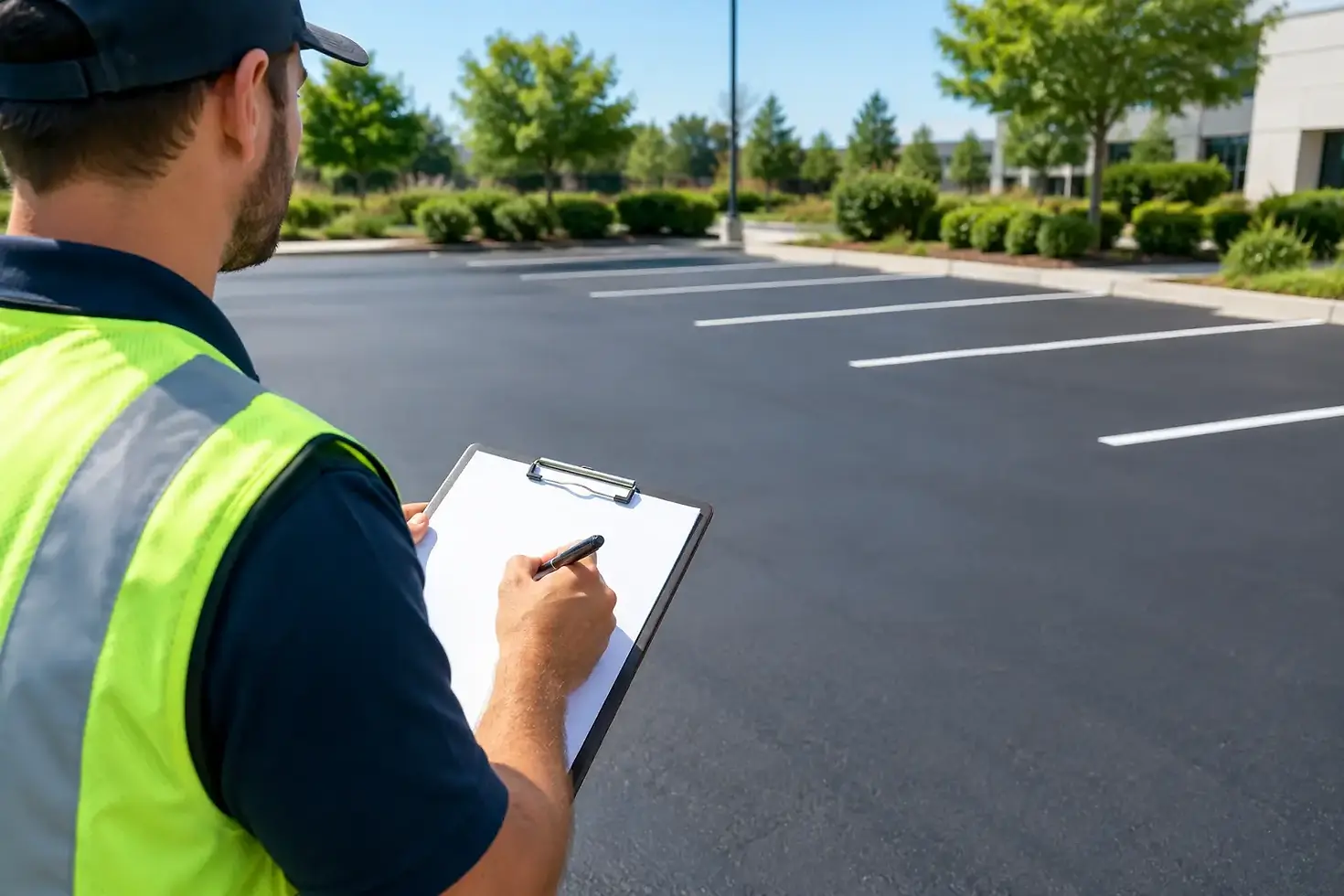
A formal inspection should be completed at least twice a year, with additional checks after major storms or before planning a maintenance budget. Walk the entire paved area, including drive lanes, parking stalls, loading zones, dumpster pads, sidewalks, curbs, and entrances.
Look for cracking, surface wear, depressions, standing water, loose asphalt, potholes, raveling, and areas where the pavement has settled. Take dated photos and note locations. This creates a useful record for comparing conditions over time and helps a contractor prepare a clear, accurate scope of work.
Pay close attention to where pavement meets concrete, drains, curbs, utility structures, and building entrances. These transition areas often show movement and cracking first. Also inspect shaded areas, spots near landscape irrigation, and low points where water remains after a storm.
Asphalt Parking Lot Maintenance Checklist
Use the following checklist as a working tool for regular property reviews. Not every item will require action during each inspection, but documenting the condition of each area makes budgeting and scheduling more manageable.
Inspect for linear cracks, alligator cracking, edge cracking, and cracks around drains or utility covers.
Check for potholes, broken pavement, loose aggregate, and areas where the asphalt surface is unraveling.
Identify depressions and low spots that hold water after rainfall or irrigation cycles.
Review entrances, drive lanes, delivery areas, fire lanes, and dumpster pads for heavy-traffic damage.
Confirm that catch basins, drains, curbs, and swales direct water away from the pavement structure.
Check pavement edges along landscaping for erosion, overgrown roots, and unsupported asphalt.
Evaluate the color and texture of the surface for oxidation, fading, or loss of protective oils.
Review parking stall lines, directional arrows, crosswalks, stop bars, fire lane markings, and ADA-accessible spaces.
Look for faded, missing, or noncompliant pavement markings and signage-related markings.
Note trip hazards, raised utility covers, broken wheel stops, and unsafe transitions between asphalt and concrete.
A checklist is most effective when it leads to a decision. Some findings may only need monitoring. Others require prompt repair because they affect safety, drainage, accessibility, or the structural life of the pavement.
Address Cracks Before Water Reaches the Base
Cracks are more than an appearance issue. Once water enters through an open crack, it can weaken the base beneath the asphalt. Repeated traffic then causes the surface to flex, widen, and break apart. In Florida, heavy rain can make this process move quickly.
Crack filling or crack sealing is generally appropriate for isolated cracks in otherwise sound pavement. The material and method should match the crack type and movement expected in that area. A contractor should first clean and prepare the crack so the repair has a reasonable chance of adhering and performing as intended.
Alligator cracking is different. This interconnected, web-like cracking usually indicates a failed base or structural weakness, not just a surface opening. Filling those cracks may improve appearance temporarily, but it will not correct the underlying problem. These areas typically need removal and asphalt patching, with base repair if necessary.
Repair Potholes, Failed Areas, and Drainage Problems Promptly
Potholes, soft spots, and broken sections should be evaluated promptly, especially in vehicle paths and pedestrian areas. Beyond the safety concern, damage can spread into adjacent pavement each time vehicles cross it.
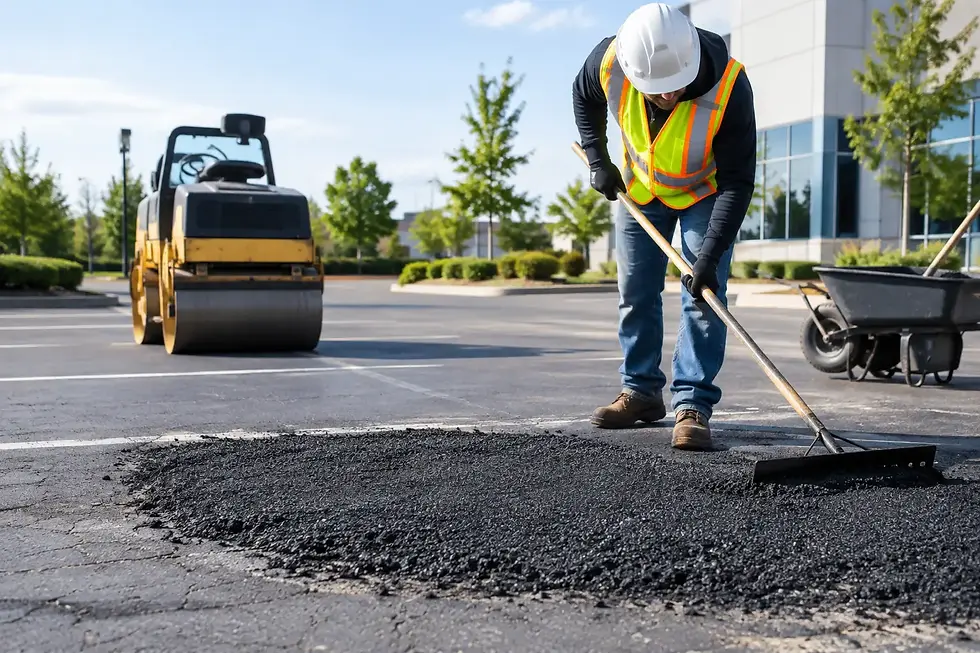
The proper repair depends on what failed. A surface-level issue may be addressed with a localized asphalt patch. If the pavement and base have deteriorated, a more thorough remove-and-replace repair is usually the better long-term choice. Low-cost surface patches can be appropriate in limited situations, but they are not a substitute for correcting unstable material below the asphalt.
Drainage deserves equal attention. Standing water may point to a clogged drain, an improper slope, settlement, or runoff from nearby landscaping. Sealcoating over a low area will not solve drainage, and new striping will not make it safer. Correcting the cause before completing surface treatments protects the value of the work.
Schedule Sealcoating at the Right Time
Sealcoating helps protect sound asphalt from oxidation, moisture intrusion, fuel drips, and Florida sun exposure. It also restores a consistent dark appearance that improves curb appeal and makes new pavement markings easier to see.
However, sealcoating is a maintenance treatment, not a repair for structurally failed pavement. Cracks, potholes, failed patches, and drainage concerns should be addressed first. Applying sealer over damaged asphalt may improve the lot's appearance for a short period, but it does not restore the pavement's strength.
Many commercial lots benefit from sealcoating on a recurring cycle, often every two to four years. The right interval depends on traffic, pavement condition, exposure, and prior maintenance. High-turnover retail areas and busy drive lanes may need more frequent attention than lightly traveled sections of the same property.
Scheduling also matters. Sealcoating requires appropriate weather conditions and cure time, so property managers should plan ahead for traffic control, tenant communication, phased work, and temporary parking arrangements. A dependable contractor will help build a schedule that limits disruption without rushing preparation or reopening areas too soon.
Keep Striping, ADA Markings, and Safety Features Visible
Line striping is a functional part of parking lot maintenance. Clear stalls, arrows, crosswalks, loading areas, fire lanes, and accessible parking markings help traffic move safely and efficiently. Faded markings create confusion for visitors and can make an otherwise well-maintained property look neglected.
Review ADA-accessible parking spaces, access aisles, directional markings, and curb ramps as part of every striping assessment. Requirements can vary based on the site and scope of work, so a property should be evaluated individually rather than relying on a one-size-fits-all layout.
Restriping is often performed after sealcoating, but it may also be needed sooner in high-traffic areas. If a property has changed tenants, traffic patterns, or use of space, this is also a good time to review the layout. For example, a medical facility may need clearer patient drop-off markings, while a warehouse may need more visible truck circulation and loading-zone controls.
Plan Maintenance by Priority, Not Just by Budget Year
The most effective pavement programs separate urgent repairs from planned preservation. Safety hazards, active potholes, drainage failures, and severe structural damage should take priority. Cracks, isolated repairs, sealcoating, and restriping can then be scheduled in a sequence that makes operational and financial sense.
For multi-property owners and managers, consistent inspections and condition records make it easier to compare sites and allocate capital dollars where they will have the greatest effect. A lot that receives timely crack repair and sealcoating may avoid premature resurfacing. A lot with widespread base failure may be better served by a larger repair or paving plan rather than repeated temporary fixes.
The goal is not to perform every possible service every year. It is to apply the right service at the right stage of the pavement's life. That approach protects appearance, safety, and long-term cost control.
If your Central Florida property has visible pavement wear, drainage concerns, or faded markings, schedule a property evaluation with Specialty Parking Lot Services LLC. A clear assessment and properly sequenced maintenance plan can help you address current issues while protecting the pavement budget for the years ahead.


Comments