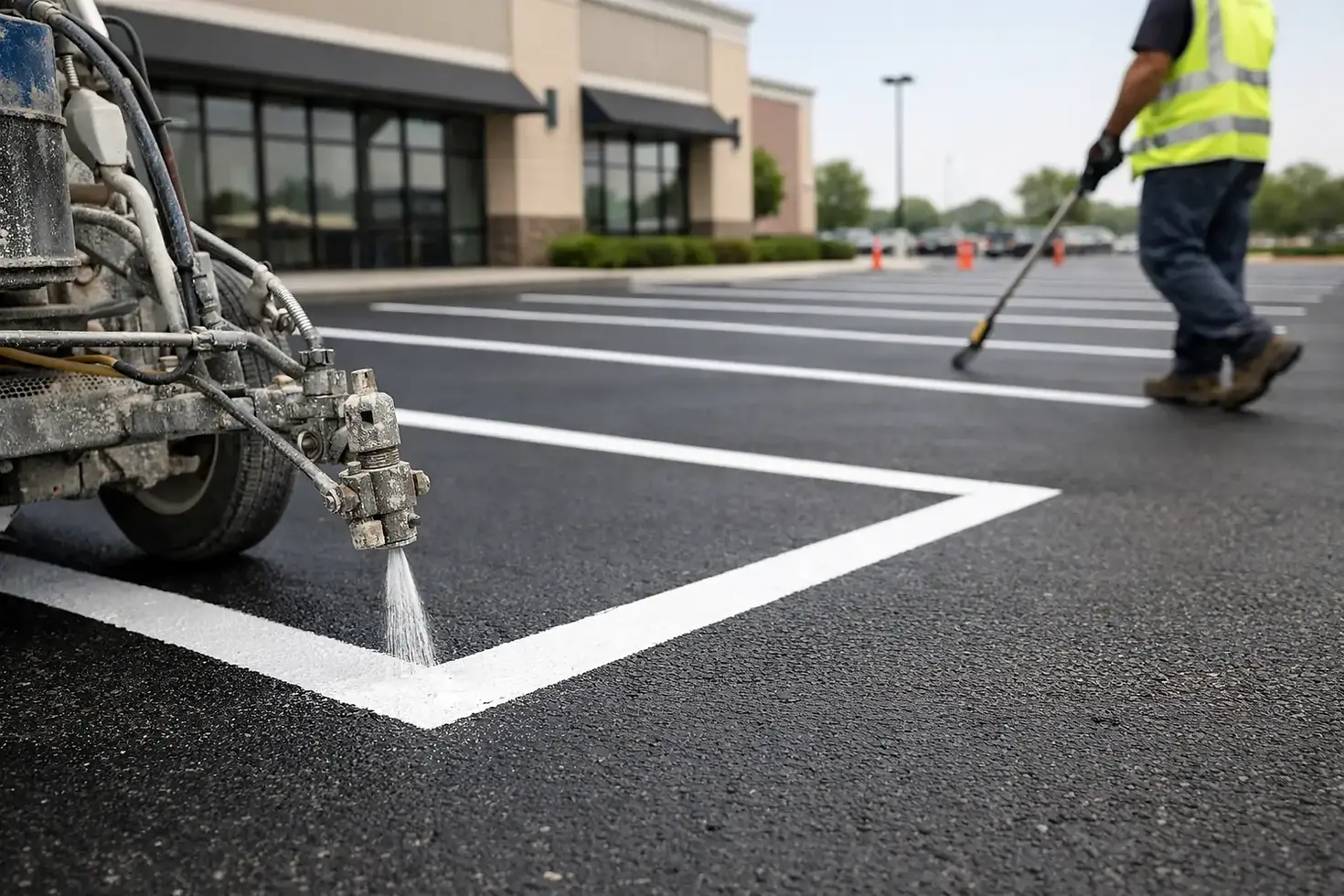
How Often to Restripe a Commercial Parking Lot

A faded parking lot can create problems long before the asphalt itself fails. Drivers hesitate at unclear traffic lanes, visitors miss accessible spaces, and a property that is otherwise well maintained starts to look neglected. When property managers ask how often to restripe a parking lot, the practical answer is usually every 18 to 24 months. However, traffic volume, weather exposure, pavement condition, and the type of facility can move that schedule in either direction.
For commercial properties in Central Florida, striping should be treated as a recurring part of pavement maintenance, not a one-time improvement. Florida sun, heavy rain, standing water, and constant vehicle traffic can wear markings down faster than expected. A regular inspection and a planned restriping schedule help protect safety, appearance, and the useful life of the pavement system.
How Often to Restripe a Parking Lot
Most commercial parking lots benefit from fresh line striping every 18 to 24 months. This is a dependable planning range for retail centers, office properties, apartment communities, medical facilities, and many municipal properties with normal daily use.
Lots with heavy traffic may need attention closer to every 12 to 18 months. This includes busy shopping centers, restaurants, warehouses with regular truck activity, schools, medical campuses, and high-turnover multifamily properties. In these environments, entrance arrows, stop bars, crosswalks, fire lanes, and accessible parking symbols often fade before standard stall lines do.
A lightly used lot may remain presentable for two to three years, especially if it is well drained, protected with quality sealcoating, and not exposed to frequent turning traffic. Even then, it should be inspected annually. Waiting until all markings are difficult to see often means the property has already spent too long with reduced visibility and a less professional appearance.
What Makes Parking Lot Markings Wear Out Faster?
Paint wear is not just a matter of time. Two parking lots striped on the same day can look very different a year later because their conditions are different.
Central Florida's climate is a major factor. Direct ultraviolet exposure breaks down paint over time, while frequent rain can carry dirt and surface contaminants across the markings. Ponding water is particularly hard on striping because it keeps moisture on the pavement longer and can indicate drainage or surface issues that need attention.
Traffic patterns also matter. The busiest parts of a lot usually fade first: drive lanes, turning areas, entrance and exit points, delivery zones, pickup lanes, and spaces near building entrances. Tires turning sharply across painted surfaces can wear lines significantly faster than vehicles driving straight into standard parking stalls.
Maintenance practices affect the result as well. Aggressive pressure washing, harsh cleaning chemicals, and repeated sweeping in the same areas can contribute to wear. More importantly, failing asphalt can shorten the life of new markings. When paint is applied over widespread cracking, loose aggregate, oxidation, or deteriorated patches, it cannot correct the underlying surface condition.
Signs Your Property Should Be Restriped Sooner
The calendar is helpful, but the condition of the markings should drive the final decision. A property may need restriping before its normal cycle if drivers cannot quickly understand where to park, stop, walk, or travel.
Look closely at stall lines, directional arrows, stop bars, fire lane lettering, loading areas, crosswalks, and accessible parking spaces. If these markings are broken, noticeably dull, or difficult to see from a vehicle, it is time to evaluate the lot. Fading that is especially visible after rain or in low light deserves prompt attention.
Accessible parking markings should receive particular attention. The required number and layout of accessible spaces depend on the property and applicable requirements, and faded symbols or unclear access aisles can create avoidable risk. Restripe work is also an opportunity to review whether existing markings still match the current layout, use of the site, and applicable accessibility requirements.
Other warning signs include vehicles parking outside designated spaces, traffic moving the wrong direction through drive lanes, visitors stopping in fire lanes, or delivery drivers struggling to identify loading areas. These are operational problems, not just cosmetic ones.
Restripe After Repairs and Sealcoating When Appropriate
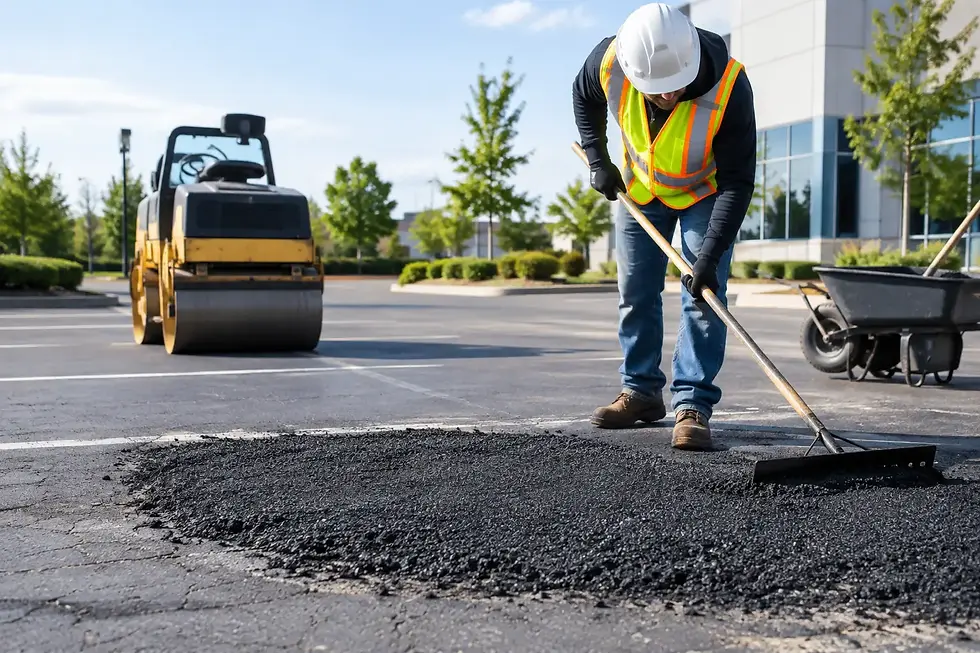
Parking lot striping often works best as part of a coordinated maintenance plan. If the asphalt has cracks, potholes, settlement, or failed areas, those repairs should generally be completed before new markings are installed. Fresh paint on a deteriorated surface may improve appearance briefly, but it does not address the reason the pavement is breaking down.
Sealcoating can be an excellent time to refresh the entire layout. A properly prepared and sealed surface provides a clean, uniform background that makes bright pavement markings stand out. For many commercial properties, combining sealcoating and restriping reduces disruption and gives the lot a more complete, professional result.
Timing matters. The sealcoat must cure adequately before striping begins. Rushing the process can affect adhesion and reduce the finish quality. A qualified contractor should recommend a schedule based on weather, surface condition, coating materials, traffic demands, and the property's operating hours.
Plan Around Operations, Not Just the Paint Crew
For an active commercial property, the best restriping plan minimizes interference with tenants, customers, employees, and deliveries. A retail plaza may need evening or phased work. An apartment community may need clear resident communication and section-by-section scheduling. Warehouses and medical facilities may require careful coordination around access routes, deliveries, emergency lanes, and peak operating periods.
Before work begins, a property evaluation should confirm the scope: which areas need repainting, whether old markings should be removed or revised, where traffic can be redirected, and what pavement repairs should be handled first. This planning is especially valuable for properties that have changed tenants, added pickup operations, altered traffic flow, or experienced parking shortages.
Restriping is also a chance to correct small layout issues before they become daily frustrations. Adjusting traffic arrows, adding clearly marked visitor spaces, refreshing loading zones, or improving pedestrian crossings can make the property easier to use without the cost of a major paving project.
Why Quality Materials and Preparation Matter
Not all striping work performs the same way. The longevity of pavement markings depends on the condition and cleanliness of the asphalt, proper layout, suitable traffic paint, application rates, weather conditions, and curing time. A low initial price can become expensive if lines wear prematurely or the layout needs to be corrected shortly after the job is complete.
Commercial properties benefit from a contractor who considers the whole pavement area rather than treating striping as an isolated task. A clear estimate should identify the intended markings, any necessary surface preparation, repair recommendations, phasing requirements, and the expected schedule. This gives property decision-makers a practical basis for planning rather than simply reacting when the lot looks worn out.
Build Restripe Inspections Into Your Maintenance Calendar
A good practice is to inspect pavement markings at least once each year and after major maintenance work. Take note of high-wear areas, drainage concerns, new traffic patterns, and markings that may need updating. For multi-property owners and management companies, documenting these observations across the portfolio makes budgeting and scheduling more predictable.
Restriping every 18 to 24 months is a sound starting point, but the right interval should reflect how people actually use the property. Specialty Parking Lot Services LLC can evaluate your Central Florida parking lot, identify the markings and pavement work that should be prioritized, and provide a clear scope for a free estimate. Scheduling service before lines become difficult to see helps keep the property safer, more organized, and ready for the next busy day.


Comments