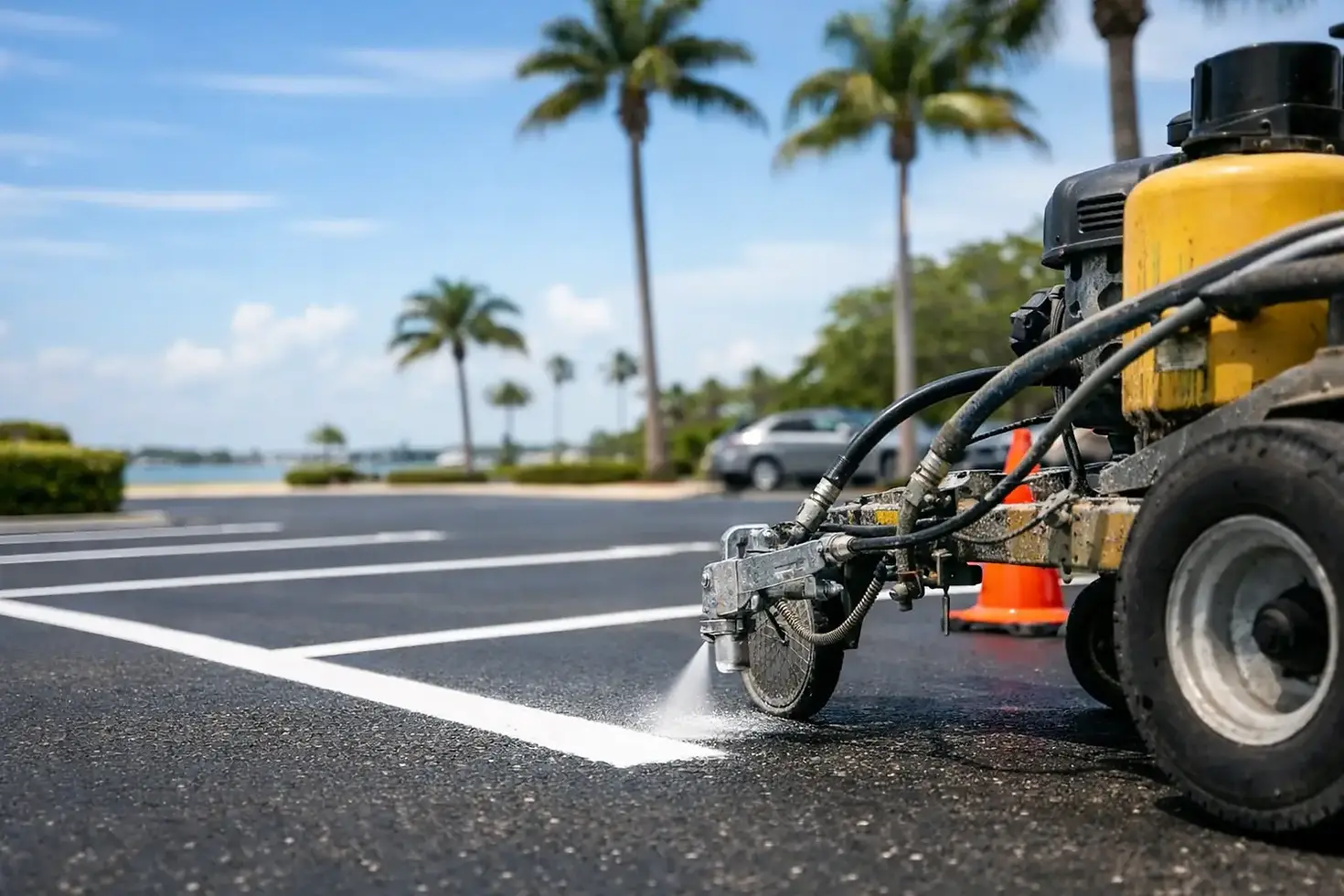
Parking Lot Line Striping Cost in Florida

A faded parking lot does more than look neglected. It can create confusion at entrances, reduce usable parking capacity, make accessible spaces harder to identify, and leave visitors unsure where traffic should flow. For property managers and owners, understanding parking lot line striping cost in Florida starts with recognizing that the number of stripes is only one part of the scope.
Commercial line striping is priced around the layout, condition, access requirements, materials, preparation, and timing needed to complete the work properly. A small office lot with a few standard stalls is a very different project from a retail center, apartment community, warehouse, medical facility, or municipal property with directional arrows, fire lanes, ADA markings, loading zones, and multiple phases of work.
What Affects Parking Lot Line Striping Cost in Florida?
The most accurate way to budget striping is to evaluate the property in person. Square footage matters, but pavement markings are typically estimated by the linear footage of striping and by each individual symbol or specialty marking. A clear scope protects the owner from vague allowances and helps the contractor schedule the right crew, materials, and equipment.
The number and type of markings
Standard parking stalls are generally the most straightforward part of a striping project. Costs increase when the layout includes double stripes, compact-car stalls, crosswalks, stop bars, directional arrows, loading areas, curb markings, numbered spaces, no-parking zones, and fire-lane lettering.
Accessible parking requires particular attention. An ADA-compliant space may include the stall boundary, access aisle, blue field or striping where specified, wheelchair symbol, and appropriate signage coordination. The correct configuration depends on the site, the number of spaces, the existing layout, and applicable accessibility requirements. Repainting a clearly defined accessible area is different from correcting an improperly designed one.
Existing pavement condition
Fresh, clean asphalt accepts paint differently than aged pavement covered in dirt, loose aggregate, oil residue, or failing sealer. Before striping, a contractor may need to clean the surface, remove old conflicting markings, or address damaged pavement.
If cracks, potholes, or raveling are present where traffic markings belong, striping alone may not be the right first step. Paint can improve visibility, but it will not stabilize failing asphalt. In many cases, crack filling, patching, or localized asphalt repair should be completed before new markings are installed.
New layout versus restriping
Restriping an existing layout is usually more efficient when the original lines are still visible and the parking configuration remains appropriate. The crew can follow established dimensions and traffic flow, provided those markings meet the property’s current needs.
A new layout takes more planning. It may require field measurements, stall-count planning, confirmation of traffic circulation, accessible-space placement, and coordination with the owner or general contractor. New construction and reconfigured lots often have a higher planning component because the layout affects both appearance and daily operations.
Project size and mobilization
Larger parking lots usually offer better unit pricing because mobilization, equipment setup, and crew time are spread across more work. Smaller projects can still be completed professionally, but mobilization represents a larger share of the total price.
This is why two properties with similar-looking parking areas can receive different estimates. A small medical office may need a limited amount of striping but require traffic control, ADA markings, and a return visit after business hours. A large warehouse may have extensive line footage but fewer specialty markings and open access for equipment.
Site access and scheduling requirements
Many commercial properties cannot close their parking areas during normal operating hours. Shopping centers, healthcare facilities, apartment communities, schools, and busy office properties may need striping completed after hours, in phases, or on a weekend.
Phased work can be the right solution, but it takes more coordination. Vehicles may need to be moved, work zones may need to be blocked off, and the contractor may need to return on multiple nights. These requirements can affect the cost, yet they often prevent unnecessary disruption to tenants, customers, residents, and deliveries.
Why Florida Conditions Matter
Florida’s weather is a practical pricing factor, not an afterthought. High heat, strong sun exposure, heavy rainfall, humidity, and frequent afternoon storms all influence scheduling and material performance. Pavement needs to be dry enough for proper application, and newly applied markings need adequate time to set before traffic returns.
For that reason, the lowest quote is not always the most useful comparison. An estimate should identify the materials being used, surface preparation included, markings to be completed, and any assumptions about weather or access. A contractor who plans around Florida conditions is helping reduce the risk of premature wear, tracking, or missed markings caused by rushed work.
Sealcoating also affects timing. When a parking lot is being sealcoated, line striping is typically performed after the sealer has cured sufficiently. Coordinating both services as one maintenance project often produces a cleaner appearance and helps ensure every stall, arrow, and specialty marking is placed consistently.
What Should Be Included in a Commercial Striping Estimate?
A useful estimate should make it easy to compare scope, not just totals. It should describe whether the project includes restriping existing lines or laying out a new configuration, along with the expected markings and site-specific work.
For a commercial property, the scope may include standard stall lines, accessible stalls and access aisles, crosswalks, fire lanes, directional arrows, stop bars, loading zones, curbs, and stenciled wording. If old markings must be removed or covered because the layout is changing, that should be identified separately.
The estimate should also clarify the work schedule. If the property must remain open, the contractor should account for staging, traffic flow, tenant communication, and any areas that need to remain available. Clear expectations before work begins are especially valuable for multi-tenant retail, medical, industrial, and multifamily properties.
How to Budget for Line Striping Without Cutting the Wrong Corners
Line striping is one of the more visible maintenance items on a property, but it should not be treated as a stand-alone cosmetic expense when the pavement has broader needs. A property with widespread fading and surface wear may benefit from pairing striping with sealcoating. A lot with deteriorated edges, depressions, or potholes may need repairs first.
Bundling related pavement maintenance can reduce disruption and create a more consistent finished result. It also gives the property manager a clearer maintenance plan rather than responding to each visible issue separately. The right approach depends on the pavement’s age, traffic level, drainage, and current condition.
There are situations where a simple restripe is exactly what the property needs. If asphalt is sound, markings are faded, and the layout is functioning well, repainting the existing pattern can restore order quickly. The key is matching the scope to the condition of the site rather than paying for unnecessary work or applying paint over problems that should be repaired.
When Should Florida Properties Restripe?
Most commercial lots should be inspected regularly, especially before peak leasing periods, annual property reviews, major tenant openings, or high-traffic seasons. Restripe when stall lines are difficult to see from a vehicle, arrows no longer direct traffic clearly, fire lanes are fading, or accessible markings are no longer distinct.
Sun exposure and traffic can cause some areas to fade faster than others. Entrance lanes, drive aisles, pickup zones, and spaces near storefronts often show wear first. Addressing those areas promptly helps maintain a professional appearance and reduces confusion before it becomes a larger operational issue.
For properties across Central Florida, Specialty Parking Lot Services LLC can evaluate the pavement, confirm the striping scope, and provide a clear estimate based on the work the site actually needs. Request a free estimate or schedule a property evaluation to plan markings, repairs, sealcoating, or a phased maintenance program around your property’s operations.



Comments