Parking Lot Resurfacing vs Replacement Decisions

A parking lot can look worn out long before it has reached the end of its useful life. The challenge for property managers is separating surface-level deterioration from structural failure. In the parking lot resurfacing vs replacement decision, choosing the wrong scope can either waste a workable pavement or leave major problems buried beneath a new layer of asphalt.
For commercial properties in Central Florida, the decision is especially consequential. Heat, intense rain, standing water, heavy delivery traffic, and daily turning movements all place stress on asphalt. A qualified site evaluation should look beyond appearance and identify what is happening in the pavement structure, drainage system, and high-traffic areas.
What Resurfacing Actually Addresses
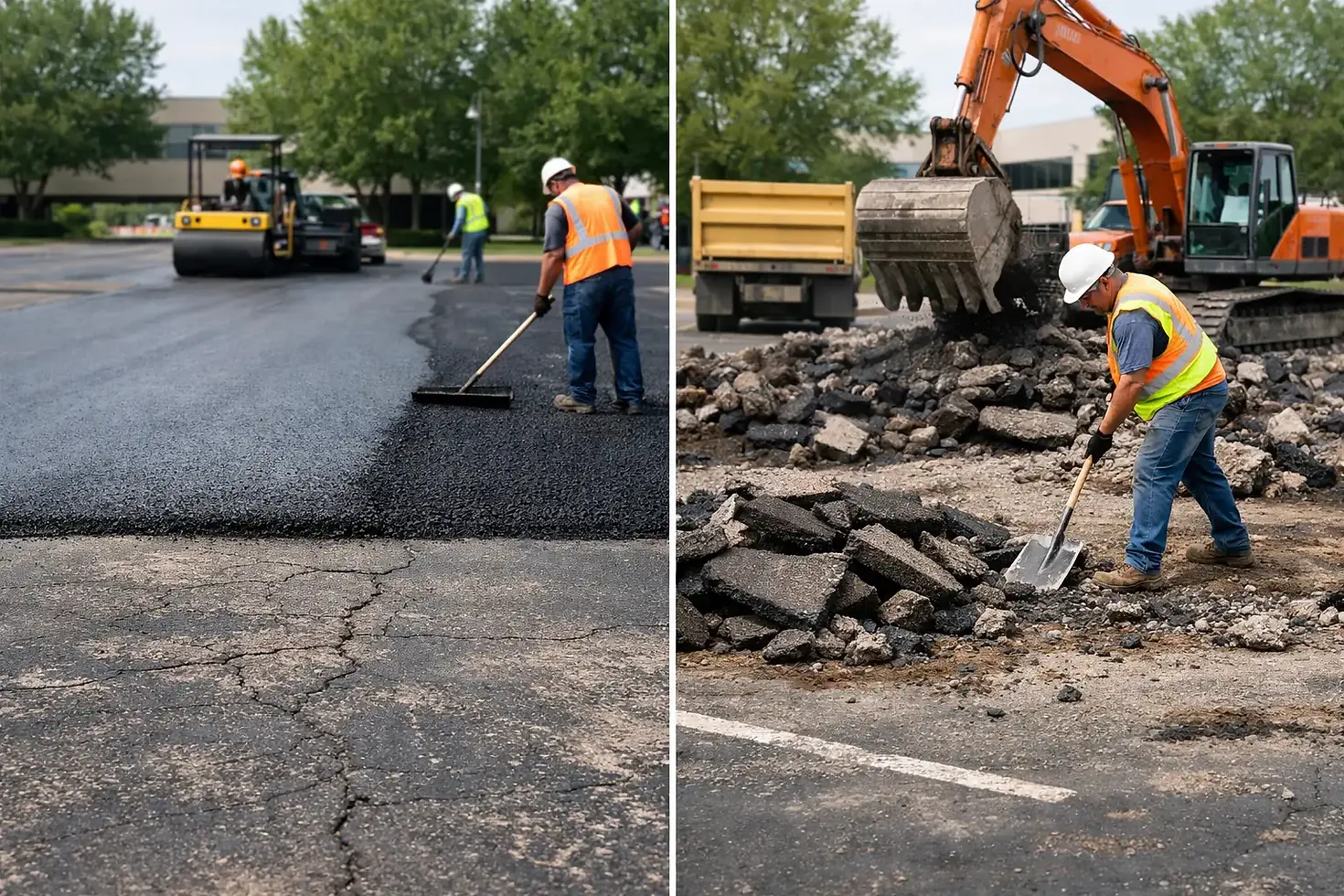
Parking lot resurfacing, often called an asphalt overlay, adds a new layer of asphalt over an existing pavement after needed preparation and repairs. It is not the same as sealcoating. Sealcoating protects and refreshes an asphalt surface, while resurfacing provides a new driving surface with added asphalt thickness.
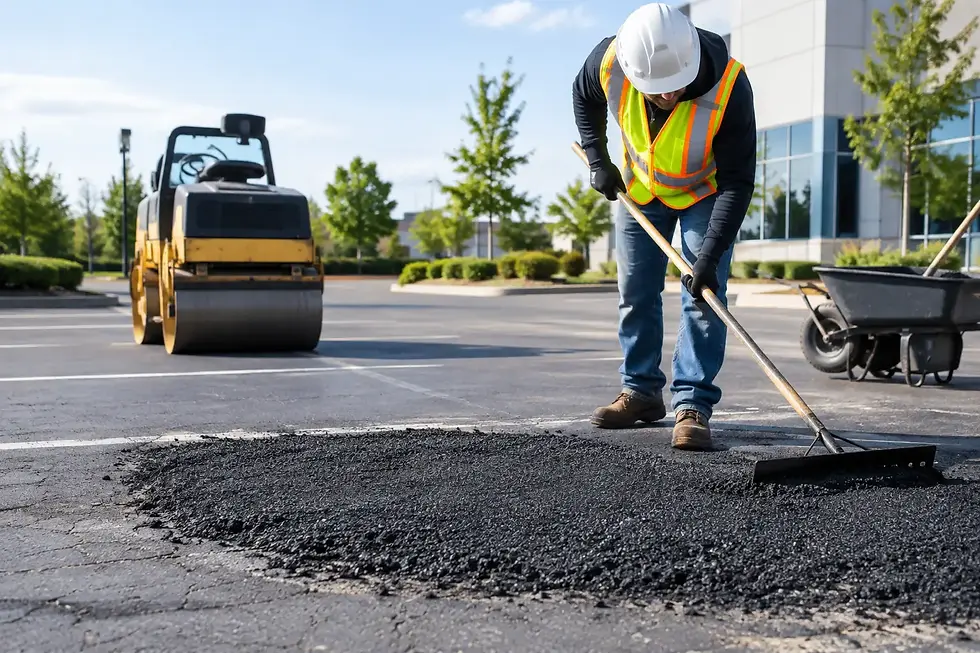
A proper resurfacing project may include crack repair, localized full-depth patching, pavement leveling, milling at entrances or transitions, drainage corrections, and new pavement markings. The goal is to preserve a sound base while restoring the surface, ride quality, appearance, and traffic function of the lot.
Resurfacing is often a practical choice when the existing pavement has widespread oxidation, minor cracking, worn aggregate, surface irregularities, or aging appearance, but its foundation remains stable. It can give shopping centers, apartment communities, medical offices, warehouses, and office parks a meaningful improvement without the cost and disruption of a complete reconstruction.
The key phrase is "stable base." New asphalt cannot correct a failed foundation on its own. If the underlying base is soft, saturated, or moving under traffic, an overlay may look good at first but begin reflecting cracks, rutting, or depressions sooner than expected.
Signs an Overlay May Be Appropriate
A resurfacing evaluation is worth considering when cracks are relatively limited, potholes are isolated, and most of the lot drains properly. The pavement may be faded, rough, or showing minor low areas without widespread base failure.
It is also a strong option when a property needs a more polished, professional appearance and new striping layout, but the existing lot still has enough structural integrity to support a new surface. For example, a retail plaza with a generally sound parking field and deteriorated driving lanes may benefit from targeted repairs followed by resurfacing rather than full removal across the site.
When Replacement Is the Better Investment
Parking lot replacement involves removing failed asphalt and, when necessary, rebuilding the aggregate base beneath it before installing new pavement. Depending on the condition of the site, replacement may apply to the entire lot or only to the areas that have failed structurally.
Replacement is generally the better long-term choice when pavement problems extend below the surface. Large alligator cracking, recurring potholes, deep ruts, widespread depressions, soft spots, and repeated failures in the same locations are all warning signs. These conditions often point to base damage, poor drainage, inadequate pavement thickness, or subgrade issues that an overlay cannot solve.
Standing water deserves particular attention. In Florida, water is one of asphalt's most persistent enemies. When water enters cracks and reaches the base, it can weaken the structure below the pavement. If a lot repeatedly holds water after normal drainage time, the solution may require more than patching the visible depression. The area may need removal, base repair, and regrading to restore proper drainage.
Replacement can also be the right move when the property's use has changed. A parking area built for passenger vehicles may not have enough thickness to withstand frequent box trucks, dumpsters, delivery vehicles, or heavier industrial traffic. Rebuilding selected travel lanes, loading areas, or dumpster pads to a stronger design can prevent the same damage from returning.
Full Replacement Is Not Always Necessary
The choice does not have to be all resurfacing or all replacement. Many commercial properties need a combined approach: full-depth replacement in failed areas, repairs to drainage-related depressions, and resurfacing over the remaining sound pavement.
This approach can be especially effective for larger sites with different traffic patterns. A warehouse may need reconstruction at dock approaches and truck turning areas, while employee parking areas may be suitable for resurfacing. A multifamily community may need base repairs at dumpster enclosures and primary drive lanes but only surface restoration in standard parking sections.
A contractor should explain these distinctions clearly. Treating every square foot the same can either increase the project cost unnecessarily or underbuild areas that carry the highest load.
Parking Lot Resurfacing vs Replacement: The Real Decision Factors
Appearance matters, but pavement condition should drive the recommendation. A site assessment should consider the age of the lot, type and extent of cracking, number and location of patches, condition of the base, drainage patterns, traffic loads, curb and sidewalk elevations, and access requirements during construction.
Pavement height is an often-overlooked factor in resurfacing. Adding asphalt changes the elevation of the lot. This can affect curb reveals, door thresholds, drainage flow, catch basins, sidewalks, ramps, and vehicle transitions at entrances. Milling may be necessary at certain locations to create smooth, safe transitions and avoid trapping water against buildings or curbs.
Budget and ownership plans matter as well. If a property is being held long term, investing in structural corrections can reduce repeated repair costs and operational disruption. If the pavement is structurally sound but nearing the point where appearance affects tenant perception, an overlay can be a cost-conscious way to extend service life.
The lowest initial price should not be the deciding factor. A thin overlay installed over unresolved cracking, drainage problems, or failed base material may appear economical on bid day and become costly when repairs return. Conversely, full replacement of pavement that could have been preserved may use capital that could be allocated to other property needs. The right scope is the one that matches the condition of the pavement and the property's expected use.
How to Plan the Work Without Disrupting Operations
Commercial paving work requires coordination, not just equipment. Before work begins, property managers should identify delivery schedules, tenant access needs, emergency routes, ADA parking and accessible routes, school or medical facility operating hours, and any events that could affect phasing.
Resurfacing and replacement can often be completed in sections so businesses, residents, visitors, and service vehicles retain reasonable access. The appropriate phasing plan depends on the size of the site, the amount of repair required, curing time, and whether drainage structures or entrances are being rebuilt.
Striping should be part of the planning conversation, not an afterthought. Fresh pavement creates an opportunity to review parking counts, traffic flow arrows, fire lanes, loading zones, ADA spaces and markings, crosswalks, and reserved parking. Clear pavement markings support safety, compliance, and a better first impression for tenants and visitors.
A detailed estimate should identify the repair areas, asphalt scope, milling or removal requirements, drainage work if needed, striping plan, and project schedule. Clear scope language helps owners compare proposals based on the work being performed rather than a single bottom-line number.
Protect the Pavement After the Project
Whether a lot is resurfaced or rebuilt, maintenance begins after construction. Keeping water moving, filling cracks before they widen, repairing isolated failures promptly, maintaining pavement markings, and scheduling sealcoating at appropriate intervals can help protect the investment.
Heavy-use areas should be inspected more often than low-traffic sections. Dumpster pads, loading zones, entrance lanes, and tight turning areas usually show distress first. Addressing those areas early is more manageable than allowing localized damage to spread into larger sections of the lot.
Specialty Parking Lot Services LLC evaluates commercial pavement based on actual site conditions, traffic demands, and long-term maintenance goals. For a Central Florida property with aging asphalt, request a free estimate or schedule a property evaluation before surface damage becomes a larger structural repair. A clear assessment now can help you plan the right project on your schedule, rather than responding to a pavement failure when it disrupts your property.


Comments