
When to Patch Asphalt Potholes at Commercial Properties

A pothole at a shopping center entrance, apartment community drive lane, or warehouse loading area rarely stays a small problem for long. Knowing when to patch asphalt potholes helps property managers address safety concerns, reduce liability exposure, and avoid turning a manageable repair into a larger paving project.
The right timing depends on more than the hole's size. Traffic volume, water intrusion, pavement condition, weather, and the location of the damage all affect whether a pothole can wait briefly, needs prompt attention, or signals a broader pavement failure. For commercial properties in Central Florida, a timely repair plan is usually more cost-effective than reacting after damage spreads.
Patch Potholes Before They Become Safety Hazards
A pothole should be evaluated as soon as it is visible, but certain conditions make repair urgent. If the damaged area creates a trip hazard, catches vehicle tires, holds standing water, or sits in a high-traffic location, delaying the work can create unnecessary risk for tenants, visitors, employees, and delivery drivers.
Priority areas include entrances, accessible parking routes, fire lanes, loading zones, drive-through lanes, pedestrian crossings, and primary travel lanes. A shallow hole in a lightly traveled back section of a lot may allow time for scheduling. A deteriorating area near a medical office entrance or a busy retail storefront should generally be addressed much sooner.
Potholes also tend to enlarge quickly once their edges break apart. Each passing vehicle applies pressure to the weakened asphalt, loosening more material and allowing water to penetrate below the surface. What begins as a localized patch can eventually require base repair, milling, resurfacing, or reconstruction if the underlying pavement continues to fail.
The Best Weather for Asphalt Pothole Repairs
Asphalt patching performs best when the repair area is dry and the material can be properly placed and compacted. In Central Florida, dry weather windows are especially valuable because frequent rain can delay preparation and affect the condition of the base beneath a pothole.
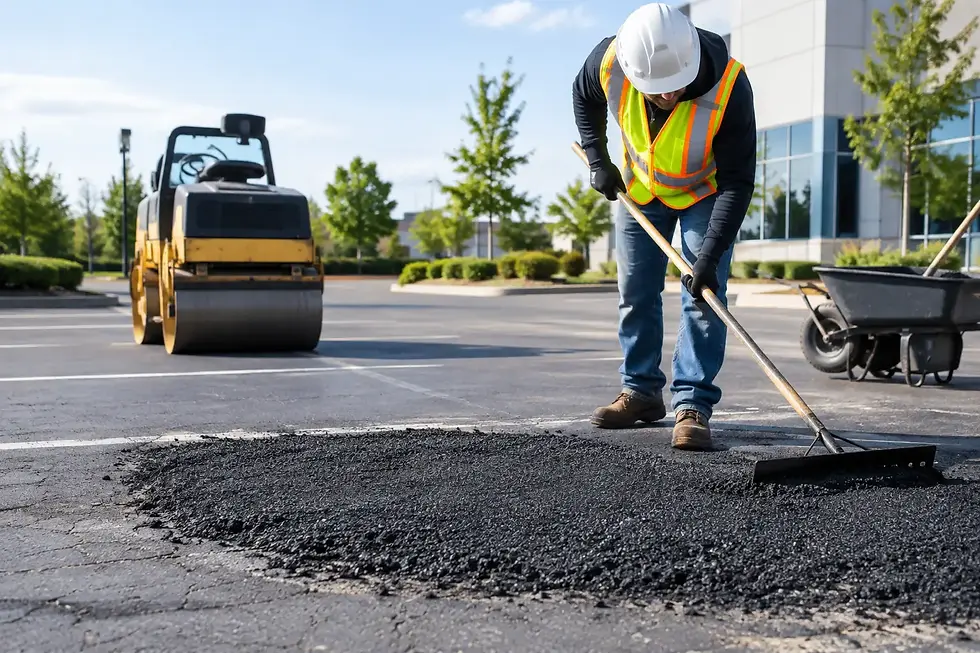
A contractor should remove loose and failed asphalt, inspect the underlying area, correct soft or saturated base material when necessary, and compact the new asphalt thoroughly. Placing a patch over wet, unstable material may provide a temporary improvement, but it is less likely to hold up under commercial traffic.
That does not mean property owners should ignore potholes during the rainy season. If a hole presents a safety concern or is actively worsening, it may require immediate temporary treatment followed by a permanent repair when site conditions allow. The practical approach is to protect the property now while planning the right long-term correction.
Why Dry Conditions Matter
Water is one of asphalt's most persistent enemies. It enters through cracks, failed joints, and broken pavement edges, then weakens the base supporting the asphalt. When traffic repeatedly loads that weakened area, the surface can collapse into a pothole.
A proper repair addresses more than what is visible from above. If the base is compromised, simply filling the hole with asphalt without proper excavation and compaction may not solve the cause of the failure. This is why repair scope should be based on an on-site evaluation rather than a one-size-fits-all patch.
Timing Repairs Around Traffic and Operations
For commercial facilities, the best time to patch may be determined as much by operations as by the pavement itself. Retail centers may need work completed before opening, after closing, or in phases that preserve customer access. Warehouses may require coordination around truck schedules and loading activity. Apartment communities may need advance resident notices and clearly marked work zones.
Planning repairs before the pothole becomes severe gives property managers more flexibility. The work can be scheduled during lower-traffic periods, staged to minimize disruption, and coordinated with other maintenance such as crack filling, sealcoating, or parking lot line striping.
Waiting until the pavement fails extensively usually limits those options. Emergency repairs often require faster decisions, create more inconvenience for users, and may cost more because the damaged area has expanded. For multi-property owners and managers, routine pavement inspections can help identify repairs early and prioritize the locations with the greatest operational or safety impact.
Signs a Pothole Needs Immediate Attention
Some potholes can be scheduled into an upcoming maintenance plan. Others should move to the top of the repair list. Consider prompt action when you see these conditions:
The hole is in a driving lane, entrance, exit, loading zone, or pedestrian path.
Water pools in or around the damaged area after rain.
Asphalt edges are crumbling, broken, or spreading beyond the original hole.
The pothole exposes loose aggregate, soft base material, or a noticeable depression.
Trucks, buses, emergency vehicles, or frequent delivery traffic use the area.
The damage is near accessible parking, curb ramps, or marked pedestrian routes.
A pothole that repeatedly reopens after prior repairs deserves closer attention. Recurring failure can indicate poor drainage, a weakened subbase, utility-related disturbance, or structural pavement problems that require a more substantial repair.
When a Patch Is Not the Complete Answer
Patching is the right solution for many isolated potholes, particularly when the surrounding pavement remains structurally sound. However, patching alone may not be the best investment if failures are widespread or the lot shows broad fatigue.
For example, an aging parking area with multiple potholes, alligator cracking, rutting, drainage issues, and crumbling edges may need more than individual repairs. Depending on the condition, a contractor may recommend targeted base repairs followed by resurfacing, or a phased reconditioning plan that addresses the most critical sections first.
The decision comes down to pavement condition and lifecycle value. Repeatedly patching a failing surface can become more expensive than addressing the larger issue at the appropriate time. On the other hand, resurfacing a lot with a few isolated failures may not be necessary if the base and surrounding asphalt are still in good condition.
A professional property evaluation helps distinguish between surface-level damage and structural failure. It also provides a clearer scope for budgeting, scheduling, and communicating with ownership or board members.
Pair Pothole Repairs With Preventive Maintenance
The best time to repair a pothole is often before the property is ready for a larger maintenance service. Once repairs are complete and have had appropriate time to cure, other services may help protect the surrounding pavement and improve the lot's appearance.
Crack filling is especially valuable because open cracks allow water to reach the pavement base. Sealcoating can help protect sound asphalt from oxidation, moisture, and surface wear, but it should not be used to hide active potholes or structural failures. Repairs should come first, followed by any recommended crack sealing, sealcoating, and fresh pavement markings.
For properties with recurring maintenance needs, a documented pavement plan can make costs more predictable. Rather than waiting for a complaint or a vehicle damage incident, managers can track repairs, identify drainage concerns, and schedule work around operating needs.
What a Proper Commercial Pothole Repair Should Include
The durability of a pothole repair depends heavily on preparation. A quality repair generally involves cutting or removing failed asphalt to create stable edges, excavating unsuitable material as needed, rebuilding and compacting the base when it has failed, installing the appropriate asphalt mix, and compacting the patch to match the surrounding surface.
The exact process varies by location and severity. A shallow surface defect may need a different approach than a deep pothole in a truck route. Areas near drainage structures, utilities, curbs, or concrete transitions may also require additional care.
The lowest initial repair price is not always the best value if the work skips preparation or uses an inadequate patch depth. For commercial properties, the goal is a repair that supports traffic, maintains a professional appearance, and reduces the likelihood of repeated disruption.
Plan Repairs Before the Next Rainy Season or Peak Traffic Period
A practical rule for property managers is to inspect paved areas before seasonal rains, busy retail periods, major tenant events, or high-demand operating seasons. This creates time to address potholes while they are still contained and to schedule work without unnecessary disruption.
Specialty Parking Lot Services LLC provides commercial asphalt repair and pavement maintenance evaluations throughout Central Florida. If your property has potholes, broken pavement, or recurring problem areas, request a free estimate and schedule a property evaluation. A clear repair plan now can help protect the pavement, the people using it, and the long-term condition of the property.


Comments