Why Crack Filling Before Sealcoating Matters

A parking lot can look ready for a fresh black finish while small cracks are already allowing water into the pavement structure. That is why crack filling before sealcoating is a standard part of responsible asphalt maintenance, not an optional add-on. For Central Florida property managers and owners, addressing cracks first helps protect the investment below the surface and gives a sealcoat application a cleaner, more durable foundation.
Sealcoating protects the asphalt surface from sun, oxidation, rain, vehicle fluids, and normal wear. It does not repair active cracks or restore failed pavement. When cracks are left open, water can continue moving through the surface after sealcoating is complete. Over time, that moisture can weaken the base, widen the crack, and lead to alligator cracking, potholes, or localized asphalt failure.
What Crack Filling Does Before Sealcoating
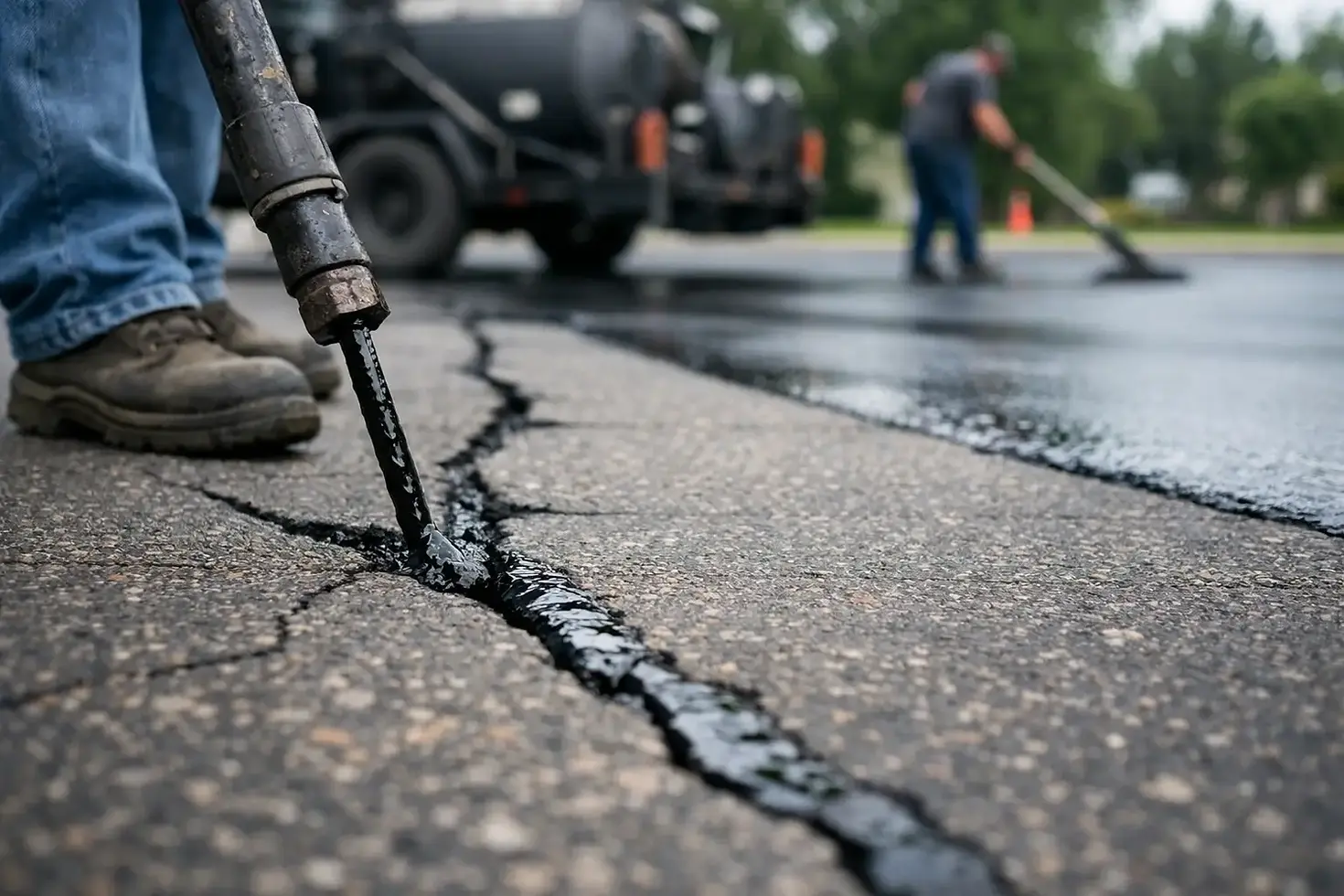
Crack filling places a compatible asphalt-based material into clean, dry cracks to reduce water intrusion and reinforce the damaged area. The material is designed to move with normal pavement expansion and contraction, which is particularly relevant in Florida's heat, heavy rain, and frequent temperature changes.
The purpose is straightforward: keep water out of the pavement system as effectively as practical. A properly filled crack will still be visible after sealcoating in many cases, especially where the pavement has moved or the crack is wider. The goal is not to make a crack disappear. The goal is to slow the deterioration that turns a manageable maintenance issue into a repair project.
For commercial properties, this work also improves the finished appearance of the sealcoating job. Filled cracks create a more uniform surface, help prevent sealcoat material from sinking into open voids, and allow pavement markings to be applied on a better-maintained surface.
Why Sealcoating Alone Is Not Enough
Sealcoat is a protective coating, not a structural repair material. It is applied in thin coats over the asphalt and is not intended to bridge substantial cracks. A contractor who simply coats over open cracks may deliver a temporarily darker parking lot, but the underlying openings remain vulnerable.
Water is the main concern. During Florida's rainy season, water can enter even narrow cracks and work its way beneath the asphalt. Traffic loads then flex the weakened area. In a retail center, apartment community, warehouse yard, or medical facility parking lot, repeated vehicle traffic can quickly turn a minor crack into a broader failure.
UV exposure adds to the problem. As asphalt oxidizes, it becomes less flexible and more prone to cracking. Sealcoating helps protect the surface from continued oxidation, while crack filling addresses the openings that already exist. These services work together, but each has a different role.
When Crack Filling Before Sealcoating Makes Sense
Most sound asphalt surfaces with scattered linear cracks are good candidates for crack filling followed by sealcoating. This is often the right approach when the pavement is structurally stable, drainage is functioning, and the damage is limited to surface aging and isolated cracking.
A property evaluation should look at crack type, width, pattern, and location. Long cracks along traffic paths, pavement edges, and utility cuts are common maintenance items. Cracks near curbs, catch basins, loading areas, and entrances deserve close attention because water and heavy traffic can accelerate failure in these locations.
Timing matters as well. Crack filling requires dry conditions and enough time for the material to set before sealcoat is applied. For commercial properties, the work is often scheduled in phases to preserve tenant, customer, employee, or delivery access. A dependable contractor will discuss traffic control, curing time, striping needs, and scheduling restrictions before work begins.
Cracks That May Need More Than Filling
Not every crack should be filled and coated. Wide, interconnected alligator cracking usually signals that the asphalt or base has lost structural support. Filling those cracks may provide a short-term cosmetic improvement, but it will not correct the cause. The appropriate recommendation may be saw cutting and patching, full-depth repair, milling and resurfacing, or a more extensive paving plan.
Depressions that hold water, soft areas, raveling asphalt, and potholes should also be addressed before sealcoating. Applying a protective coating over failing asphalt does not stop the failure. In fact, it can make a property appear improved for a short period while the underlying problem continues.
This is where a site-specific recommendation matters. The lowest initial scope is not always the best value if it leaves known failures untreated. A good pavement maintenance plan separates work that can be preserved from work that needs repair, so maintenance dollars are directed where they will have the most useful life.
The Proper Sequence for Commercial Pavement Maintenance
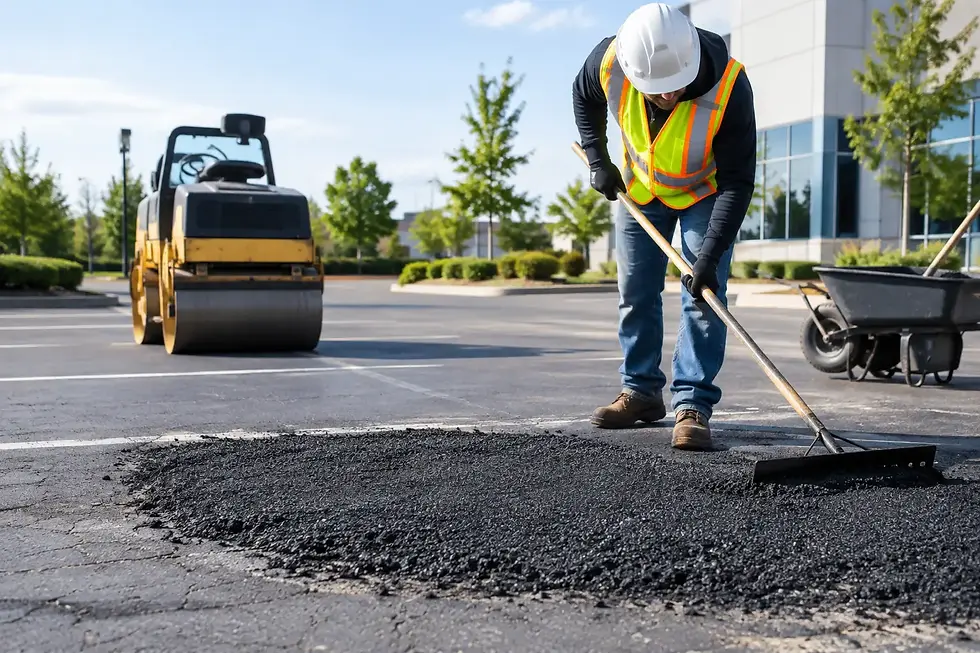
The condition of the lot determines the exact scope, but the typical sequence is repair first, then crack filling, surface preparation, sealcoating, and finally line striping or pavement markings. Each step affects the quality of the next one.
Before filling cracks, the pavement should be inspected for failed areas, drainage concerns, vegetation growth, and loose debris. Cracks need to be cleaned so the filler can adhere to the asphalt rather than dust, sand, or moisture. If vegetation is growing through a crack, it should be removed and the area properly prepared.
After crack filling has cured as needed, the pavement is cleaned again before sealcoating. Dirt, leaves, oil spots, and loose aggregate can interfere with coating adhesion. Heavily soiled areas may require additional preparation or treatment. This attention to preparation is one reason two sealcoating proposals can look similar on paper but produce very different results in the field.
Once sealcoating has cured, fresh striping, ADA markings, directional arrows, fire lane markings, and parking stalls can be applied as required. For properties with high public traffic, the completed work should improve both appearance and day-to-day usability.
Common Planning Mistakes Property Managers Can Avoid
One common mistake is waiting until the parking lot looks severely faded before scheduling maintenance. Fading is visible, but cracking and water intrusion often begin earlier. Sealcoating on a practical maintenance cycle, with crack filling performed as needed, is generally more cost-effective than allowing the surface to age into widespread repair needs.
Another mistake is treating every crack as the same condition. A narrow surface crack, a wide crack at a failed utility cut, and a web of alligator cracking require different decisions. Commercial pavement maintenance should be based on what the asphalt is telling you, not a one-size-fits-all package.
It is also worth considering operations. A sealcoating project affects parking access, delivery routes, trash collection, and customer circulation. Shopping centers may need overnight or phased work. Medical offices may need clear access routes at all times. Warehouse facilities may need work coordinated around truck movements. Planning the scope and schedule early reduces disruption and helps protect the finished surface while it cures.
How Often Should Cracks Be Filled and Lots Sealed?
There is no single schedule that fits every property. Traffic volume, pavement age, drainage, shade, exposure to sunlight, and prior repairs all affect maintenance needs. In Central Florida, intense sun and seasonal rain can be especially demanding on exposed commercial asphalt.
As a general practice, property managers should inspect paved areas at least twice a year and after significant weather events. New cracks should be evaluated before they spread or collect water. Sealcoating is commonly planned every few years for pavement that remains in good structural condition, but the correct interval depends on the lot and the quality of previous maintenance.
A multi-property owner may benefit from maintaining a simple pavement inventory that identifies each site's condition, recent repairs, sealcoating history, and expected future needs. That approach makes budgeting more predictable and helps prioritize the properties where preventive work will have the greatest impact.
Choose a Scope That Protects the Property
Crack filling before sealcoating is a practical investment when the asphalt is still worth preserving. It helps control water intrusion, supports a more professional finished appearance, and can extend the useful life of pavement that is otherwise in serviceable condition. It is not a substitute for structural repairs, which is why a clear evaluation should come before any recommendation.
Specialty Parking Lot Services LLC works with commercial property owners and managers throughout Central Florida to assess pavement conditions, plan appropriate repairs, and schedule maintenance around property operations. Request a free estimate or schedule a property evaluation before small cracks become larger capital expenses.
The best time to address a crack is usually before it becomes a pothole, disrupts traffic, or forces an emergency repair. A timely site review gives you options, and options are what keep pavement maintenance manageable.


Comments