
When Parking Lot Reconditioning Makes Sense

A parking lot can look worn out long before it has reached the point of full replacement. Faded striping, surface cracks, isolated potholes, drainage concerns, and rough driving areas all affect how customers, tenants, employees, and visitors experience a property. Parking lot reconditioning is the practical middle ground between minor maintenance and major reconstruction - a coordinated plan to restore the pavement’s function, safety, and appearance while protecting the existing asphalt investment.
For commercial property managers and owners in Central Florida, the right scope depends on the pavement’s actual condition. A lot with surface-level wear may respond well to repairs, crack filling, sealcoating, and new markings. A lot with widespread base failure, deep rutting, or serious drainage issues may need more extensive asphalt work. The value of reconditioning is not simply making a lot look newer. It is addressing the problems that can become more disruptive and expensive if left in place.
What Parking Lot Reconditioning Typically Includes
Parking lot reconditioning is not one single service. It is a package of maintenance and repair work selected to address the needs of a specific property. The process often begins with a site evaluation to identify distressed pavement, traffic patterns, drainage concerns, trip hazards, faded markings, and areas where the lot no longer functions efficiently.
For a commercial property with generally sound asphalt, reconditioning may include crack filling, asphalt patching, sealcoating, and line striping. This combination protects the pavement surface, improves curb appeal, and restores clear traffic direction. At a retail center or medical facility, refreshed stall lines, crosswalks, fire lanes, and accessible parking markings can be just as important as the asphalt repairs themselves.
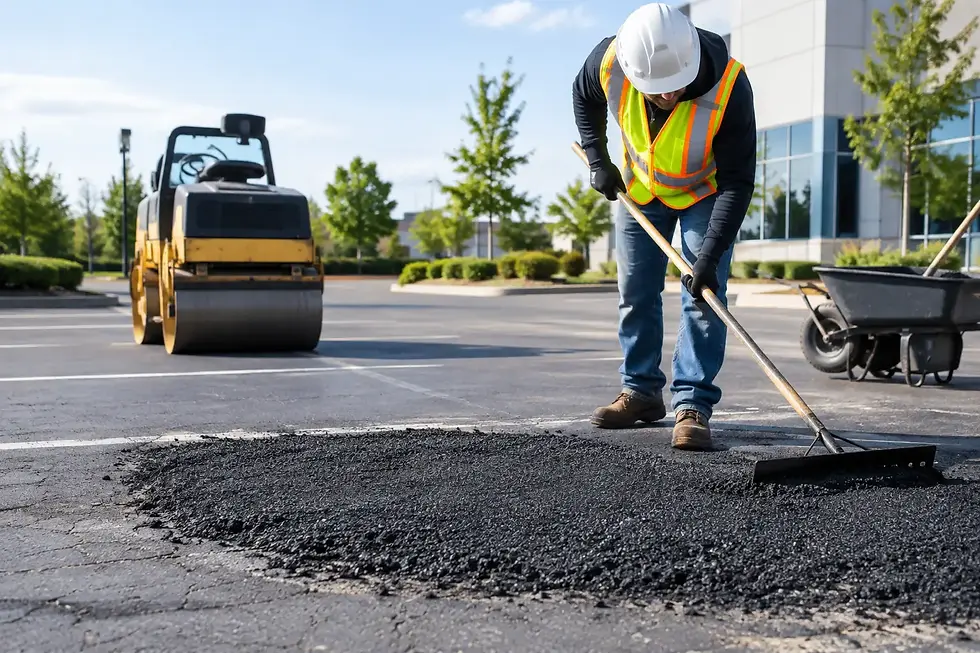
Properties with more localized failures may need removal and replacement in targeted sections before surface treatments are applied. A patch installed over soft, unstable material will not provide a lasting result. Proper reconditioning addresses the underlying failure where necessary, then ties repairs into the rest of the parking area as cleanly as possible.
The goal is to develop a scope that fits the lot. Applying the same treatment to every property can waste money in some areas and fall short in others.
Signs Your Property May Need Reconditioning
Most parking lots do not fail all at once. The warning signs usually appear gradually, which gives owners and managers an opportunity to plan work before it turns into an emergency.
Cracks are among the first signs to watch. Small cracks allow water into the pavement structure. In Florida, heavy rain and frequent moisture can weaken the base beneath the asphalt, especially where drainage is poor. Filling cracks while they are still manageable helps prevent them from widening and developing into more serious failures.
Potholes, depressions, alligator cracking, loose aggregate, and raveled surfaces require closer attention. Alligator cracking - a web-like pattern of interconnected cracks - often indicates structural weakness rather than a simple surface issue. Sealcoating over that condition may improve color temporarily, but it will not correct the failed pavement underneath. Those sections usually need asphalt repair or replacement before a protective coating is considered.
Faded pavement markings also signal that a lot may be due for reconditioning. Unclear parking stalls, directional arrows, stop bars, loading zones, fire lanes, and ADA markings create avoidable confusion. On busy properties, poor striping can affect traffic flow and make the lot feel neglected even when the pavement itself is still serviceable.
The Difference Between Reconditioning and Resurfacing
Property owners sometimes use the terms interchangeably, but parking lot reconditioning and resurfacing are different approaches.
Resurfacing generally involves placing a new asphalt overlay over an existing pavement after needed preparation and repairs. It can be a strong option when the underlying pavement has enough structural integrity to support it. An overlay provides a new driving surface and can substantially improve appearance, but it is a larger investment than routine maintenance.
Reconditioning is broader and more flexible. It may include selective repairs, crack filling, sealcoating, and restriping without adding a new asphalt layer across the entire lot. It is often the better choice when deterioration is present but the pavement is not yet a candidate for full resurfacing or replacement.
There are trade-offs. Reconditioning will not solve deep structural failure across a large portion of the property. Conversely, resurfacing a lot that could have been preserved through timely repairs and protective maintenance may spend capital sooner than necessary. A field evaluation is the best way to determine which path offers the most appropriate lifecycle value.
Why Timing Matters in Central Florida
Central Florida pavement faces a demanding combination of heat, ultraviolet exposure, intense rain, and high traffic in many commercial settings. Sun exposure dries and oxidizes asphalt over time, making it more brittle. Water then enters cracks and weak areas, creating conditions for further deterioration.
Scheduling work before the lot becomes heavily distressed gives property managers more flexibility. Repairs can often be phased around tenant activity, deliveries, school calendars, peak retail periods, or special events. Waiting until potholes, drainage failures, or widespread cracking create operational problems can narrow the available options and increase disruption.
Weather also affects how pavement work is scheduled. Asphalt repair, sealcoating, and striping require appropriate site and weather conditions for proper application and curing. A dependable contractor should communicate clearly about scheduling, access restrictions, drying time, and any changes needed due to rain.
Planning a Reconditioning Project Around Operations
A well-planned project protects both the pavement and the property’s day-to-day operation. Before work begins, management should consider how customers, residents, staff, vendors, and emergency vehicles will move through the site while sections are closed.
For a shopping center, work may be completed in sections to preserve access to active storefronts. At an apartment community, scheduling may need to account for resident notices, overflow parking, and designated towing procedures. Industrial facilities may need to coordinate around truck routes, loading docks, shift changes, and equipment access. The details vary, but the planning principle stays the same: keep the project organized and communicate early.
A clear scope should identify which areas will be repaired, whether patching includes full-depth removal, what surface preparation is required, where striping will be restored, and how traffic control will be handled. This reduces misunderstandings and gives decision-makers a clearer basis for comparing proposals. The lowest number on a proposal is not always the lowest long-term cost if preparation, material quality, or necessary repairs have been excluded.
What Quality Workmanship Looks Like
The visible finish matters, but much of the value in parking lot reconditioning comes from preparation. Cracks should be cleaned and treated with the appropriate material. Failed asphalt should be removed to the required depth, with unstable base addressed when needed. Sealcoating should be applied to a properly prepared surface, not used as a shortcut over active pavement failure.
Line striping should be laid out carefully and applied with clear, consistent lines. Commercial markings need to support safe circulation and meet the property’s practical requirements. That may include accessible spaces and access aisles, directional arrows, crosswalks, stop markings, loading areas, fire lanes, curbs, and reserved spaces.
Good workmanship also includes dependable communication. Property managers need a contractor who can explain what is being done, provide realistic scheduling expectations, and keep the project moving without unnecessary surprises.
Build Reconditioning Into a Maintenance Plan
The most cost-effective pavement programs are proactive. Rather than treating every issue as a separate emergency, owners can track pavement condition, repair failures early, renew markings as needed, and schedule protective treatments before oxidation and water intrusion gain ground.
The exact interval depends on traffic volume, sun exposure, drainage, prior repairs, and the pavement’s age. A warehouse truck lane and a lightly used office parking area will not wear at the same rate. Reviewing the property periodically helps prioritize the areas that need attention first and allows capital work to be budgeted with fewer surprises.
If your Central Florida property has worn pavement, fading markings, or growing repair needs, request a free estimate and schedule a property evaluation with Specialty Parking Lot Services LLC. A clear assessment can help you decide whether targeted repairs, a full reconditioning program, resurfacing, or a phased maintenance plan makes the most sense for the property.
Well-maintained pavement sends a practical message: the property is managed, access is taken seriously, and small problems are handled before they become major ones.


Comments