Asphalt Pavement Repair for Commercial Properties

A small crack at the entrance to a shopping center can become a pothole quickly under Florida heat, heavy traffic, and seasonal rain. Asphalt pavement repair is not simply about making a parking lot look better. For commercial properties, it is a practical way to address trip hazards, vehicle damage, drainage concerns, and the higher cost of allowing pavement failures to spread.
The right repair depends on what is happening below and around the damaged surface. A patch may be appropriate for an isolated failure. Widespread cracking, soft areas, or recurring potholes may point to base problems, drainage issues, or pavement that is nearing the end of its useful life. A qualified site evaluation helps property managers choose work that fits the actual condition of the pavement rather than paying for a short-term fix that fails again.
What Causes Commercial Asphalt to Fail?
Asphalt surfaces are built in layers. The visible pavement is only one part of the system. When water enters cracks and reaches the base beneath the asphalt, the supporting material can weaken. Traffic loads then flex the pavement, causing cracks to widen, edges to break apart, and depressions to form.
In Central Florida, intense sun and heat can dry and oxidize asphalt over time. The binder loses flexibility, and the surface becomes more vulnerable to cracking. Afternoon storms and standing water add another challenge. Water that remains along curbs, low spots, catch basins, or building entrances can accelerate deterioration even when the surface initially appears to have only minor damage.
Commercial traffic also matters. Delivery trucks, garbage trucks, buses, and frequent turning movements put far more stress on pavement than passenger vehicles. The loading areas of retail centers, dumpster pads, warehouse drive lanes, and fire lanes often need a different repair approach than a lightly traveled parking row.
Warning Signs That Call for Asphalt Pavement Repair
Property teams do not need to wait for a large pothole to schedule an evaluation. Early action usually provides more options and helps control the scope of work.
Alligator cracking is one of the clearest signs of structural failure. This pattern resembles reptile skin, with interconnected cracks in a concentrated area. It often means the asphalt and supporting base have weakened under repeated loads. Applying sealcoat over alligator cracking does not correct the underlying issue. The failed section typically needs to be removed and rebuilt.
Potholes, raveling, and broken pavement edges also require attention. Raveling occurs when aggregate begins coming loose from the surface, leaving a rough and open texture. It can be caused by aging, traffic, moisture, or poor surface integrity. At entrances and along curbs, broken edges can continue to unravel if the repair does not include a clean, properly supported edge.
Standing water deserves close attention as well. Water may signal a drainage problem, a low area in the pavement, settlement around a structure, or an issue with nearby grading. Repairing the asphalt without correcting the reason water collects can lead to repeated failures in the same location.
Other conditions worth documenting include cracks wider than a hairline, areas that feel soft under vehicle traffic, tire depressions, uneven transitions, damaged speed humps, and worn pavement around utility cuts. These may not all require full-depth repair, but they should be reviewed before they become larger liability and maintenance concerns.
Matching the Repair Method to the Failure
A reliable repair recommendation begins with the cause of the problem. The lowest initial-cost option is not always the best value if it leaves compromised material in place or does not account for drainage and traffic conditions.
Crack Filling for Early-Stage Deterioration
When cracks are relatively narrow and the surrounding pavement remains stable, crack filling can help limit water intrusion. The contractor cleans the cracks and applies an appropriate crack-filling material to close the opening. This is a maintenance service, not a structural repair, but it can extend the life of sound pavement when performed before cracks become widespread.
Crack filling is often most effective as part of a planned maintenance program. Once cracks are addressed, sealcoating may help protect the surrounding asphalt from oxidation and weather exposure. Timing matters. Sealcoat should not be used to hide serious failures that need patching or reconstruction first.
Surface Patching for Localized Damage
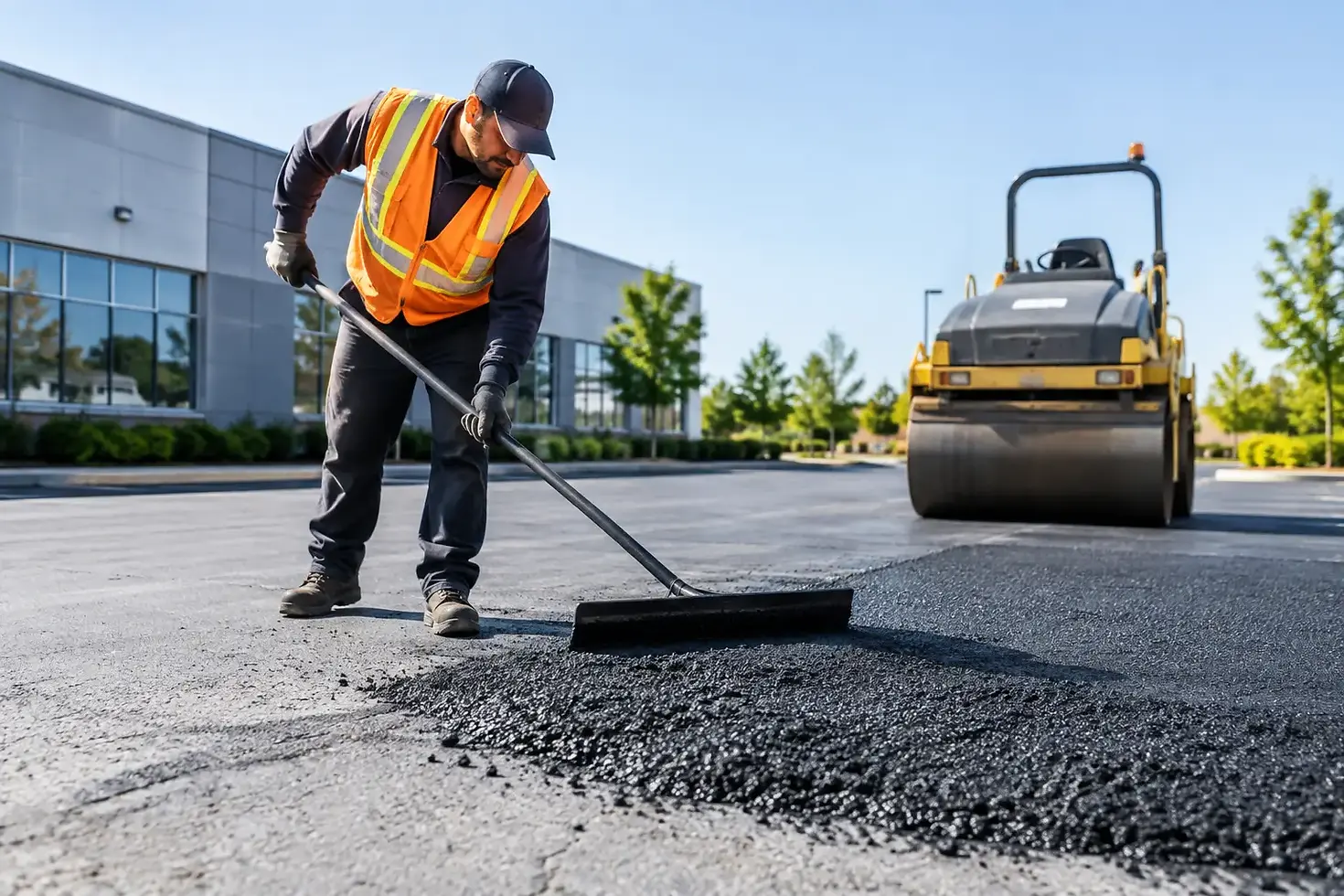
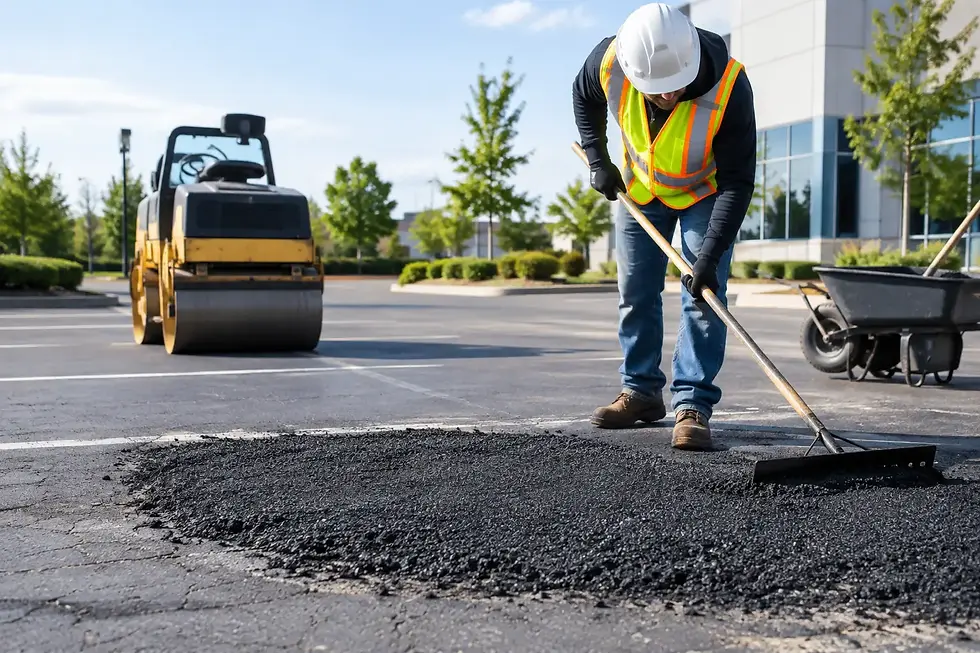
For limited surface deterioration, a localized patch may restore a damaged area without removing the full asphalt depth. This option may work where the issue is confined to the upper layer and the base remains firm. Proper preparation is essential: damaged material should be cut cleanly, removed, and replaced with compatible asphalt that is placed and compacted correctly.
Surface patches are not the right answer for every pothole or cracked area. If traffic has damaged the supporting layers below, a thin patch may look acceptable at first but fail under continued use.
Full-Depth Asphalt Repair for Structural Failures
Full-depth repair is commonly recommended for alligator cracking, recurring potholes, soft areas, failed utility cuts, and heavily traveled zones with base damage. The contractor removes the failed asphalt, evaluates the base, replaces or stabilizes unsuitable material as needed, and installs new asphalt at the appropriate depth.
This approach costs more than a superficial patch because it addresses the underlying failure. For a warehouse truck lane, medical facility entrance, dumpster area, or busy retail drive aisle, full-depth repair is often the more durable choice. The depth and materials should be based on expected traffic, not just the appearance of the adjacent pavement.
Milling, Overlay, and Reconditioning
When a parking lot has widespread surface wear but the underlying structure is generally sound, milling and overlay may be a practical option. Milling removes a controlled depth of existing asphalt, typically near transitions, curbs, and drainage structures. A new asphalt layer is then installed to renew the driving surface and restore a more consistent profile.
An overlay does not solve deep structural failures on its own. Problem areas should be repaired beforehand, and drainage conditions must be reviewed. Otherwise, reflective cracking and localized failures can return through the new surface. For aging commercial lots, a reconditioning plan may combine targeted full-depth repairs, crack filling, milling, overlay work, sealcoating where appropriate, and new striping.
Planning Repairs Around Property Operations
Commercial asphalt work needs to fit the way a property operates. A repair plan for an apartment community may need phased access for residents and emergency vehicles. A retail plaza may require work outside peak customer hours. Industrial facilities may need to keep loading docks, truck routes, and employee entrances available throughout the project.
Before work begins, confirm the repair areas, traffic patterns, staging locations, curing time, and temporary access routes. If pavement markings will be affected, include line striping and ADA-related markings in the scope so the lot can reopen in an organized, functional condition. Clear communication before and during the project reduces disruption for tenants, customers, employees, and delivery drivers.
It is also wise to consider adjacent maintenance while equipment is already on site. A property may have a few urgent patches but also cracks in other sections, faded fire-lane markings, or worn stop bars. Combining compatible services can provide a more coordinated result, provided each item is necessary and properly scoped.
How to Evaluate an Asphalt Repair Proposal
A useful proposal should explain more than a square-foot price. It should identify the repair areas, describe whether the work is surface patching or full-depth replacement, state the expected asphalt depth, and address base preparation where applicable. It should also clarify how the contractor will handle transitions, compaction, cleanup, traffic control, and final pavement markings.
Ask how drainage will be evaluated if water is present, especially near repaired areas. Ask whether the repair is intended as a temporary stabilization measure or a longer-term solution. Both can have a place, but the property owner or manager should understand the expected service life and limitations of the selected approach.
Scheduling and responsiveness matter as much as materials. For active properties, a dependable contractor should provide a clear work plan, coordinate access, communicate changes promptly, and leave the repaired area safe and presentable. That is particularly important for properties with multiple tenants, public access, or strict operational requirements.
Make Repairs Part of a Pavement Maintenance Plan
The most cost-effective repair is often the one completed before failure spreads. Regular property inspections can identify cracking, drainage concerns, and high-stress areas early. From there, repairs can be prioritized by safety, operational impact, and risk of further damage rather than handled only as emergency work.
For commercial properties in Central Florida, Specialty Parking Lot Services LLC can evaluate damaged pavement, explain the available repair options, and provide a clear scope based on the property’s needs. Request a free estimate or schedule a property evaluation before small failures create larger disruptions across your lot.


Comments