
Sealcoating Versus Asphalt Overlay: Which Fits?

A parking lot can look tired long before it has reached the end of its useful life. The challenge for property managers is determining whether the surface needs protection or a more substantial renewal. In the decision between sealcoating versus asphalt overlay, the right answer depends on the pavement’s condition below the surface, not simply how faded or worn it looks.
For commercial properties in Central Florida, that distinction matters. Sun exposure, heavy rain, standing water, delivery traffic, and daily vehicle use all affect asphalt differently. A properly timed sealcoat can extend service life and improve appearance at a manageable cost. An overlay can provide a new driving surface, but it is only effective when the existing pavement and base are stable enough to support it.
Sealcoating Versus Asphalt Overlay: The Core Difference
Sealcoating is a protective maintenance treatment applied to the existing asphalt surface. It helps shield pavement from oxidation, water intrusion, vehicle fluids, and Florida’s intense UV exposure. It also restores a uniform dark appearance and provides a clean surface for fresh parking lot striping, directional arrows, ADA markings, and curb markings.
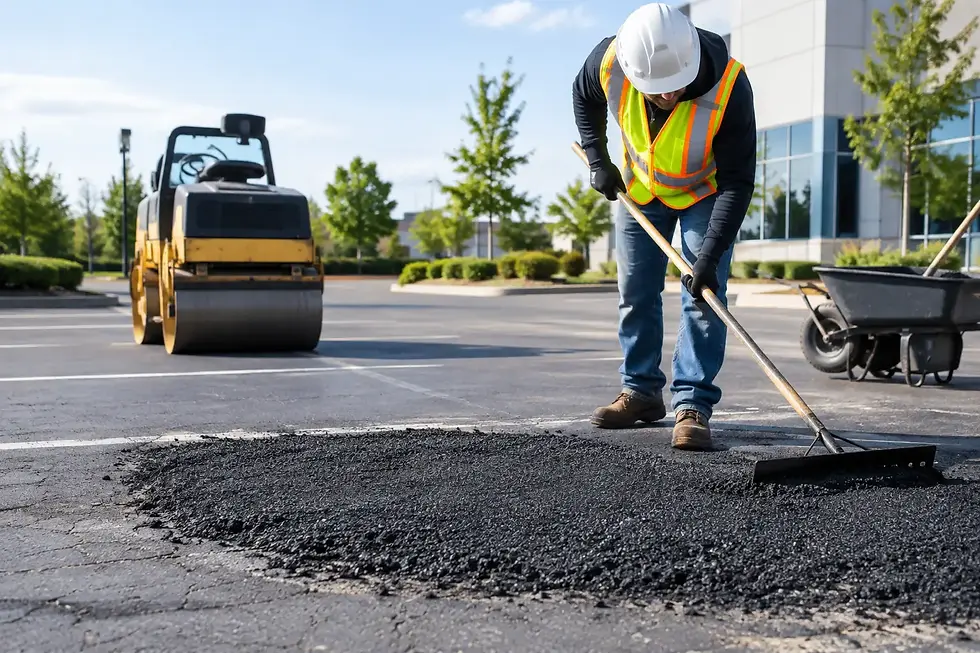
An asphalt overlay, often called resurfacing, is a new layer of hot-mix asphalt installed over prepared existing pavement. It is a more involved construction process than sealcoating. The contractor typically completes needed repairs, addresses failed areas, prepares transitions at curbs and entrances, and installs a new asphalt wearing surface before restriping.
Put simply, sealcoating preserves sound pavement. An overlay renews the surface of pavement that is more worn but still structurally viable. Neither service is a substitute for correcting serious base failure, poor drainage, or widespread pavement breakdown.
When Sealcoating Is the Better Investment
Sealcoating is generally the right choice when asphalt is still structurally sound. A parking lot may have lost its original dark color, show light surface wear, or have small cracks that can be properly filled, but it should not have widespread potholes, deep alligator cracking, or areas that flex under traffic.
For a retail center, office complex, apartment community, or medical facility, sealcoating is often part of a planned maintenance cycle. When applied at the appropriate time, usually after crack filling and localized asphalt repairs, it slows the aging process that eventually leads to larger and more expensive repairs.
A sealcoat does not add structural strength. It is not designed to cover major cracks permanently, level depressions, or repair potholes. Applying it over failing pavement may improve the color temporarily, but it will not stop the underlying damage from returning.
The value of sealcoating comes from preparation and timing. Cracks should be cleaned and filled. Failed areas should be patched. Drainage concerns should be identified. The surface should also be properly cleaned so the coating can adhere as intended. Those steps are a meaningful part of the work, particularly on commercial lots where appearance, traffic flow, and safety all matter.
Signs Your Lot May Be Ready for Sealcoating
Fading from black to gray, minor surface raveling, small isolated cracks, and a generally weathered appearance are common indicators. If water still drains properly and the pavement remains firm under normal traffic, preventative maintenance may be more cost-effective than waiting for visible failure.
A property that receives routine sealcoating and crack filling can often defer major resurfacing for years. The exact schedule depends on traffic volume, shade, drainage, asphalt age, and prior maintenance, but waiting until pavement is badly deteriorated usually limits the options.
When an Asphalt Overlay Makes More Sense
An overlay is typically considered when the pavement surface has reached a more advanced stage of wear. The lot may have extensive cracking, worn aggregate, recurring patches, uneven areas, or a rough driving surface, while the underlying base remains stable enough to support a new asphalt layer.
Before placing an overlay, a qualified contractor should evaluate why the pavement is deteriorating. Surface cracking caused by age and oxidation is different from alligator cracking caused by base failure. Depressions near storm drains may indicate drainage problems. Repeated truck traffic at loading areas may require full-depth repair rather than simply more asphalt on top.
When these issues are addressed correctly, an overlay can improve ride quality, appearance, and long-term functionality. It can also provide a better starting point for new striping layouts, updated ADA-compliant markings, fire lanes, and traffic-control markings.
An overlay requires careful planning around elevations. Adding asphalt changes the height of the pavement, which can affect curbs, sidewalks, door thresholds, drain inlets, speed bumps, and concrete wheel stops. Milling, which removes a portion of the existing asphalt, may be needed in transition areas to maintain safe drainage and smooth connections.
An Overlay Is Not a Cure for Structural Failure
Overlaying pavement with an unstable base usually creates a short-term visual improvement, not a durable solution. Cracks and failures can reflect through the new asphalt, especially where moisture, weak subgrade, or heavy loading caused the original damage.
In those locations, full-depth asphalt repair may be necessary before resurfacing. This work removes failed asphalt, repairs the base as needed, and installs new asphalt to restore structural support. It costs more than surface treatment, but it addresses the problem rather than covering it.
Cost Depends on Scope, Not Just Square Footage
Sealcoating generally has a lower initial cost than an overlay because it uses a protective coating rather than a new asphalt layer. For sound pavement, that lower cost can make it one of the most practical maintenance investments a property can make.
An overlay costs more because it involves asphalt materials, equipment, labor, surface preparation, repairs, transitions, and often milling. However, comparing only the initial price can lead to the wrong decision. A sealcoat applied to pavement that needs structural repair is not a savings. Likewise, an overlay installed before necessary base repairs can become an expensive temporary fix.
Commercial property decision-makers should look at lifecycle value. The best scope is the one that matches the pavement’s present condition, supports the property’s budget cycle, and reduces the likelihood of avoidable emergency repairs. A clear proposal should separate crack filling, patching, drainage corrections, sealcoating, overlay work, and striping so the owner understands what each item is intended to accomplish.
How Florida Conditions Affect the Decision
Central Florida pavement is exposed to conditions that make proactive maintenance especially worthwhile. Strong sun dries and oxidizes asphalt binders. Heavy rain can enter open cracks and weaken the pavement system. Standing water accelerates deterioration, while delivery trucks, refuse vehicles, and high-turning traffic add stress at entrances and loading areas.
Drainage deserves special attention. Water that consistently ponds in the same location can indicate a low area, blocked drainage structure, settlement, or inadequate slope. Sealcoating will not correct ponding, and an overlay may not correct it unless the scope includes proper leveling and drainage work.
Scheduling also matters for occupied properties. Sealcoating may require phased closures while the material cures. Overlay projects require a more detailed traffic and access plan, particularly at medical offices, retail centers, apartment communities, schools, and industrial facilities. A contractor should coordinate work areas, tenant communication, access routes, striping schedules, and reopening times before work begins.
A Practical Way to Evaluate Your Parking Lot
Start with a site evaluation rather than selecting a service based on appearance alone. Review the age of the pavement, condition of cracks, number and size of patches, drainage patterns, traffic types, and the condition of high-stress areas such as entrances, dumpster pads, loading zones, and drive lanes.
If the lot is fundamentally sound, crack filling, localized repair, sealcoating, and line striping may be the appropriate maintenance plan. If the surface is broadly worn but the base is stable, an overlay with targeted repairs may offer better value. If the pavement shows widespread base failure, substantial reconstruction in the affected areas may be necessary before any surface treatment can perform properly.
For multi-property owners and property managers, documenting these conditions also helps prioritize capital planning. Not every lot needs the same service in the same year. A phased plan can protect better-performing areas while directing larger investments to the locations with the greatest operational and safety needs.
A well-maintained parking lot supports more than curb appeal. It helps manage water, protects vehicles and pedestrians, presents a professional image to tenants and customers, and gives owners more control over long-term repair costs. Specialty Parking Lot Services LLC can evaluate your pavement, explain the practical options, and provide a clear scope for the work your property actually needs. Request a free estimate or schedule a property evaluation to plan the next step before minor wear becomes a larger pavement issue.


Comments