
HOA Parking Lot Maintenance That Protects Reserves

A parking lot rarely fails all at once. It usually gives an HOA years of warning through fading striping, standing water, open cracks, loose aggregate, and isolated potholes. Consistent HOA parking lot maintenance turns those warning signs into manageable projects instead of an unplanned paving assessment that puts pressure on association reserves and homeowners.
For community managers and HOA boards in Central Florida, the goal is not to perform every service on a fixed schedule. The right scope depends on pavement age, traffic patterns, drainage, prior repairs, and the condition beneath the surface. A practical maintenance plan protects the pavement investment while keeping the property safe, orderly, and presentable.
Why HOA Parking Lot Maintenance Requires a Long-Term View
Association parking areas serve residents, guests, delivery vehicles, emergency responders, trash trucks, and service vendors every day. They are also one of the first parts of the community that prospective buyers and visitors see. Faded lines, broken asphalt, and poorly defined parking can affect curb appeal, but the greater concern is liability and the cost of deferred maintenance.
Water is asphalt's primary enemy. Once water enters cracks, it can weaken the base beneath the pavement and accelerate surface failure. Florida's heat, heavy rainfall, UV exposure, and frequent storm activity create conditions that can shorten the useful life of an unmaintained lot. A small crack that could have been cleaned and filled may eventually become a failed area requiring removal, base repair, and new asphalt.
That is why a board should evaluate maintenance as a lifecycle decision. Sealcoating and crack filling have a cost, but they are generally far less expensive than waiting until broad sections of pavement need reconstruction. The lowest initial proposal is not always the best value if it omits surface preparation, proper materials, traffic control, or the repairs needed before a protective coating can perform properly.
Start With a Property-Specific Pavement Evaluation
An effective plan begins with an on-site evaluation, not an assumption that every parking area needs the same treatment. A contractor should walk the property, identify visible conditions, review drainage patterns, and distinguish surface-level concerns from signs of deeper structural failure.
During the review, look for alligator cracking, which appears as interconnected cracks resembling reptile skin. This commonly indicates base failure and cannot be corrected with sealcoating alone. Also note potholes, depressions that hold water, raveling where aggregate is coming loose, failed patch edges, and cracks along curbs, drains, or utility cuts.
Traffic should be part of the assessment. Visitor spaces may experience light passenger-vehicle use, while dumpster pads, mailbox areas, loading zones, and fire lanes often carry heavier or slower-turning vehicles that place more stress on asphalt. Those areas may need a different repair approach than the rest of the lot.
For larger communities, it can be helpful to divide the pavement into zones and rank each area by condition. This allows the board to address urgent safety concerns first while scheduling preservation work for stable sections before they deteriorate.
Match the Service to the Pavement Condition
Not every crack, faded surface, or rough area requires paving. The appropriate solution depends on what is causing the problem and how much pavement is affected.
Crack Filling Protects Sound Pavement
Crack filling is one of the most valuable preventive services for asphalt that is otherwise in good condition. The process helps limit water intrusion through non-structural cracks. It is most effective when performed before cracks widen, multiply, or allow the pavement edges to break apart.
Cracks should be clean and dry enough for the material to bond properly. A rushed application over debris or moisture may look acceptable at first but will not offer the same protection. Timing matters, especially during Florida's rainy season.
Asphalt Repairs Address Localized Failure
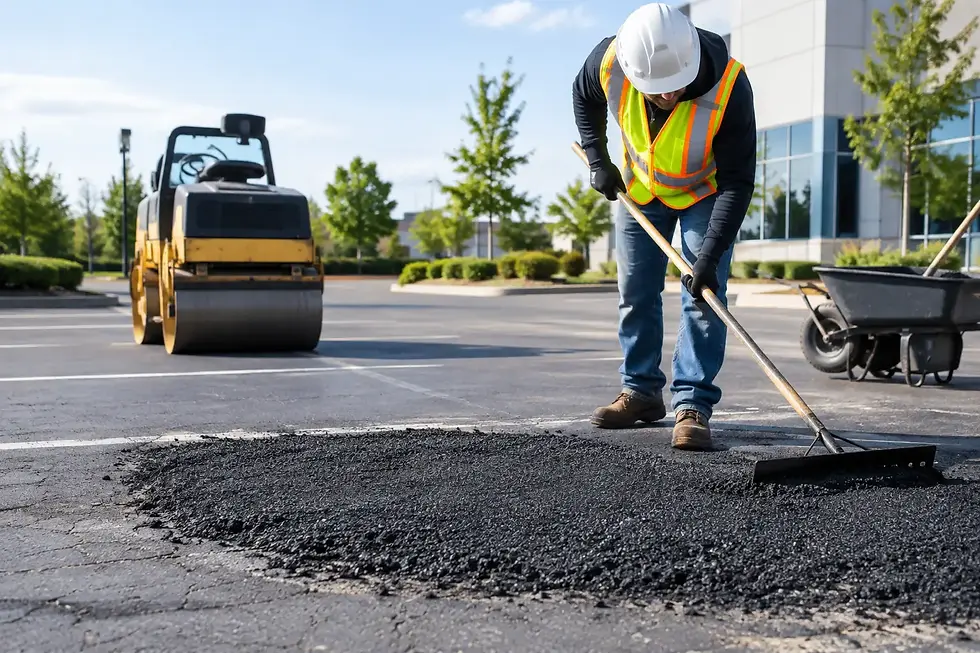
Potholes, failed areas, and alligator cracking usually require asphalt repair rather than a surface treatment. Depending on the condition, the contractor may remove the failed asphalt, correct weak base material, install new asphalt, and compact the repair to support traffic.
A patch can be an efficient solution when deterioration is localized. If failures are widespread across the lot, repeated patching may only postpone a larger issue. At that point, the board may need to compare reconditioning, resurfacing, or phased paving against the cost and disruption of ongoing repairs.
Sealcoating Preserves, But Does Not Rebuild
Sealcoating restores a uniform dark appearance and creates a protective barrier against oxidation, sun exposure, and everyday vehicle fluids. It is a preservation service for structurally sound asphalt. It does not repair potholes, correct poor drainage, or hide severe cracking for long.
Before sealcoating, necessary crack filling and asphalt repairs should be completed. The surface also needs proper cleaning and preparation. For an HOA, the best time to sealcoat depends on weather, resident access needs, curing time, and the ability to close sections of parking in an organized sequence.
Line Striping Completes the Work
Fresh pavement markings improve parking efficiency, traffic flow, and the overall appearance of the community. They can also help reinforce fire lanes, loading areas, directional arrows, crosswalks, visitor spaces, and accessible parking requirements.
Striping should be planned carefully after resurfacing or sealcoating. The layout needs to reflect the current property conditions, not simply copy old faded lines. If parking patterns, curb extensions, sidewalks, ramps, or accessible routes have changed, it may be time to review the marking plan with the contractor and applicable requirements in mind.
Drainage Is Part of the Pavement System
A recurring puddle is not just a cosmetic concern. Standing water can penetrate cracks, soften the pavement structure, and create a safety issue for residents. It can also point to a drainage problem involving the asphalt grade, catch basins, curbing, or surrounding landscape.
Boards should pay close attention to water after a substantial rainstorm. Note where it collects, how long it remains, and whether water is flowing toward buildings, sidewalks, or low areas in the lot. Cleaning debris from drains and keeping inlets functional is basic maintenance, but some conditions require asphalt correction or drainage repairs.
An experienced contractor should be direct about this trade-off. A sealcoat application may improve appearance, but it will not solve a low spot that continues to hold water. Addressing the underlying condition first is usually the more durable decision.
Build Maintenance Into the HOA Budget and Reserve Plan
Waiting for an emergency makes budgeting harder and limits the board's options. A documented pavement plan gives the association time to obtain proposals, notify residents, coordinate access, and schedule work around community events or peak occupancy.
A workable plan generally includes four parts:
Annual visual inspections and a professional condition review when changes are observed.
Routine crack filling and localized asphalt repairs before water damage expands.
Periodic sealcoating and restriping for pavement sections that remain structurally sound.
Long-range budgeting for resurfacing or replacement based on pavement condition and expected service life.
The exact intervals vary. A newer lot with good drainage and light traffic may need less frequent work than a community with heavy delivery traffic, shade, tree-root pressure, or ongoing drainage issues. The important point is to make decisions from the pavement's actual condition rather than waiting for appearance alone to dictate the schedule.
Plan Work Around Residents and Daily Access
Even well-planned work can create inconvenience if residents are not given clear instructions. HOA managers should coordinate early with the contractor on phasing, temporary parking, vehicle relocation notices, access for emergency services, and expected curing periods.
For sealcoating and striping, closing the entire lot may be unnecessary. Phasing the project by sections can maintain access while allowing each area adequate time to cure. Larger asphalt repairs or paving may require more detailed traffic planning, particularly at communities with limited entrances or assigned parking.
Clear communication protects the schedule. Residents need practical information: where to park, when vehicles must move, which entrances remain open, and when they can return to treated areas. A dependable contractor will help establish a realistic sequence instead of promising a schedule that does not account for weather or site logistics.
Choose a Contractor for More Than Surface Appearance
HOA pavement work affects safety, resident satisfaction, reserve planning, and the community's presentation. The contractor should provide a clear scope that identifies what will be repaired, how surfaces will be prepared, what materials will be used, and how the project will be phased.
Ask whether the recommendation addresses the actual pavement condition. A quality proposal should separate crack filling, repairs, sealcoating, markings, and any drainage-related work so the board can understand the purpose of each item. It should also make clear when a lower-cost option is only temporary and when a more substantial repair is warranted.
Specialty Parking Lot Services LLC works with HOA and property management teams to evaluate pavement conditions, plan practical scopes, and schedule asphalt maintenance with the property’s needs in mind. Request a free estimate or schedule a property evaluation before minor pavement issues become a larger reserve expense.


Comments